






- 'Is democracy in India being undermined like China, Russia and North Korea': Gehlot on FIR against Rahul, Priyanka Gandhi
- Delhi Seemapuri Building Collapse: Several Feared Trapped As Rescue Operation Underway
- Claude Users Can Work Across Google Docs, Sheets and Slides In-App
- Rapido Ride Turns Into Nightmare After Captain Flees With Injured Passenger
- 7 Must-Watch OTT Releases For Your Dussehra Holidays
- ‘His Lips Turned Blue’: Dentist Recalls 45-Minute Effort To Save Flydubai Pilot Smit Machchhar
- Airtel Postpaid Plans Bring Free International Roaming From Rs 499
- 'Politics means nation building to him': Rajnath Singh on PM Modi's 25 years in public service
Srisailam dam gates remain shut amid severe inflow deficit
In Short
- Srisailam dam gates remain completely closed into late August—a rare delay compared to typical first inflows arriving by mid-June or July
- The reservoir currently holds just 41.51 TMC ft (19% of its 215.81 TMC ft capacity) at 820.90 feet, compared to 209.16 TMC ft recorded during the corresponding period last year

Share :
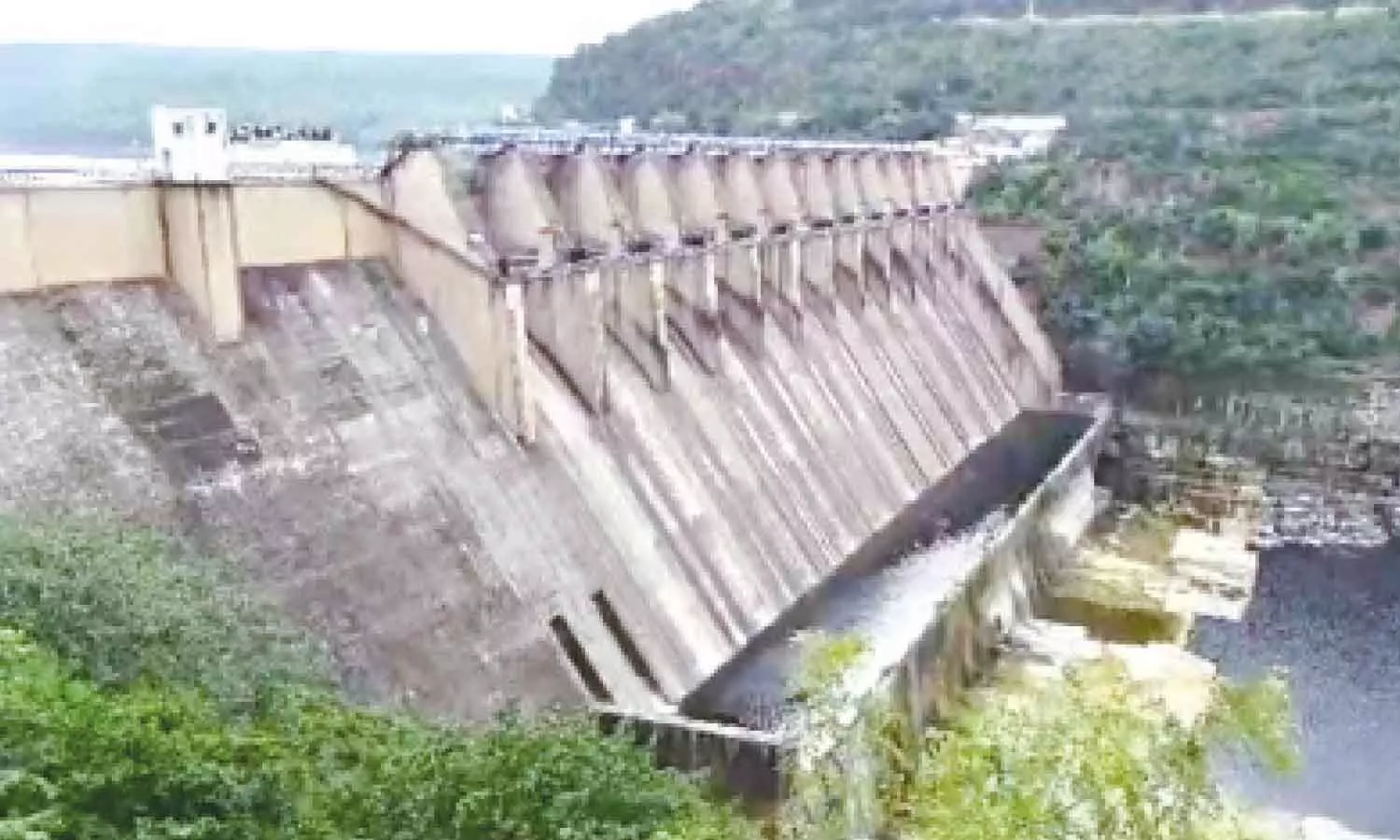
Srisailam reservoir
Kurnool: The Srisailam reservoir is experiencing an unprecedented delay in receiving its first significant Krishna floodwaters this monsoon, with its spillway gates remaining completely closed into the fourth week of August.
In normal monsoon cycles, authorities lift the dam gates at least two to three times by mid-August, as initial inflows traditionally reach Srisailam between mid-June and early July. However, dry conditions across local and upper catchments have kept the reservoir parched.
As of Wednesday, Srisailam held barely 41.51 TMC ft against its gross storage capacity of 215.81 TMC ft, with water levels standing at 820.90 feet against the Full Reservoir Level of 885 feet. During the corresponding period last year, storage stood at a robust 209.16 TMC ft.
Local rainfall deficits have compounded the crisis, with Kurnool district receiving under 30 mm of rainfall since July 1 against the seasonal normal of 117.23 mm. Poor runoff from upper catchments in Karnataka and Maharashtra has drastically reduced inflow through the Krishna and Tungabhadra rivers.
Other regional storage centers reflect similar depletion: Nagarjuna Sagar holds 137.34 TMC ft against 312.05 TMC ft, while Tungabhadra holds 28 TMC ft against 105.79 TMC ft.
Overall combined storage across Andhra Pradesh and Tungabhadra system major reservoirs sits at just 33.55 percent of total capacity.
Irrigation officials and water resources experts cautioned that without a swift revival of the southwest monsoon over the Western Ghats and upper catchment regions, downstream agricultural, drinking water, and hydropower generation networks face severe operational strains.
India condemns attacks on commercial vessels in Black Sea, reiterates call for dialogue and diplomacy
'Is democracy in India being undermined like China, Russia and North Korea': Gehlot on FIR against Rahul, Priyanka Gandhi
SSB pays tribute to bravehearts killed in Maoist attack 15 years ago
SSB pays tribute to bravehearts killed in Maoist attack 15 years ago
Pixel Moments to Politics For Cong As BJP Celebrates Modi@25
Dramatic face-off near Jantar Mantar. Rahul and Priyanka sit on the road
MPs vs Police. Chaos and High Drama Unfold on Delhi Roads
Henri Kagan, Kenso Soai Win 2026 Nobel Chemistry Prize for Autocatalysis
AP cabinet approves 12 agenda items
High Courts should not suggest custodial interrogation of accused, says Supreme Court


