






Anthropic Commits $200 Million to Study AI’s Impact on Jobs and the Economy

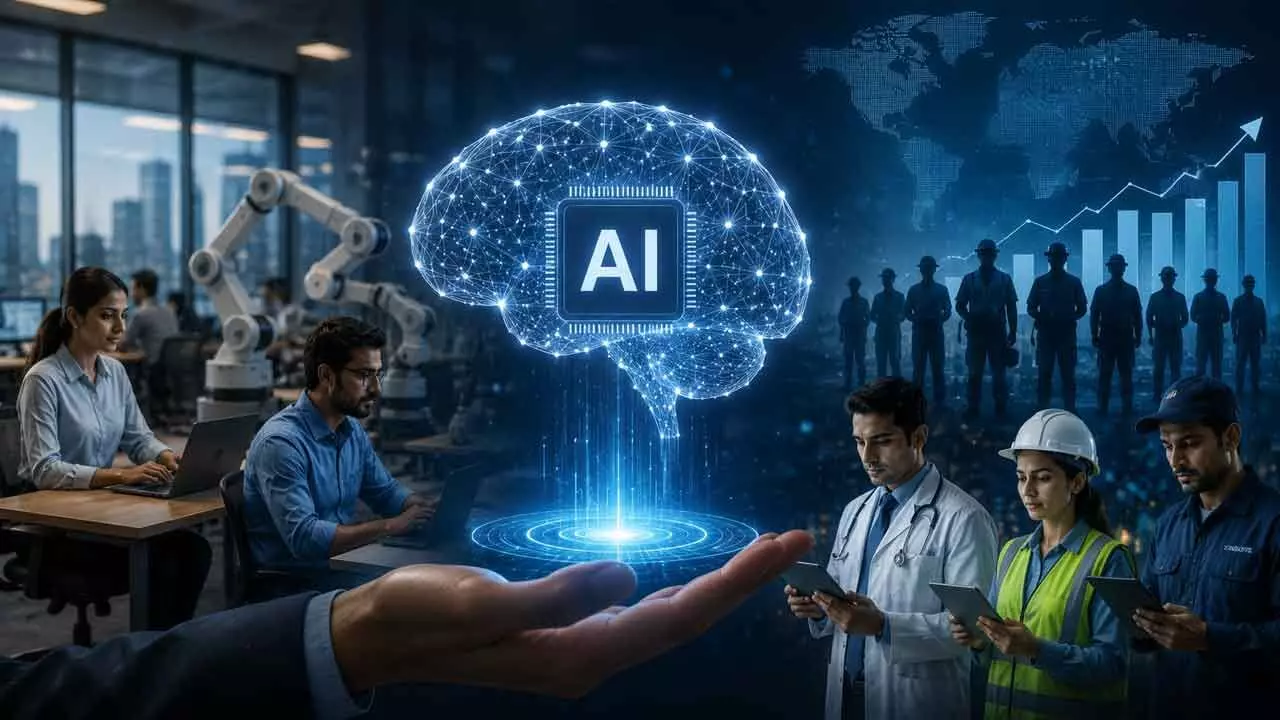
Anthropic launches a $200 million initiative to study AI-driven workforce changes while advocating policies to share economic benefits.
As concerns grow over the long-term effects of artificial intelligence on employment and economic stability, AI company Anthropic has announced a major $200 million commitment aimed at understanding how the technology could reshape the workforce and broader economy.
The initiative, unveiled on Wednesday, comes alongside a new set of policy recommendations from the company and a detailed essay by Anthropic CEO and co-founder Dario Amodei. Through the investment, Anthropic plans to fund research into AI’s economic consequences and evaluate policies that could help workers and communities adapt to rapid technological change.
Amodei argued that AI could bring disruptions to labour markets on a scale greater than previous technological revolutions and warned that such effects may persist for extended periods.
"The key challenge in such a world won't be incentivising growth, but finding a way for everyone to share in the benefits," Amodei wrote.
The announcement follows similar discussions within the AI industry about how wealth generated by artificial intelligence should be distributed. Earlier this week, OpenAI outlined goals that included ensuring the benefits of AI are “widely shared.” OpenAI CEO Sam Altman has also explored ideas involving public ownership stakes in AI companies to create wealth-sharing mechanisms for society.
Meanwhile, President Donald Trump indicated that discussions are underway with leading AI firms regarding potential ways to return value to the public. Speaking to reporters in the Oval Office, Trump said:
"We're talking about giving back something to the public, and if we do that, the public will become very rich," Trump said. "I think they'll do that, and I think it'll make it very popular."
In his essay, Amodei emphasized that his warnings about potential job displacement are intended to encourage preparation rather than fear.
He said he has raised concerns not because he is "trying to be a prophet of doom" but because he wants "both policymakers and the private sector to have the best chance to adapt and respond".
Among the measures proposed by Amodei are improved systems for tracking AI-related job losses, incentives that encourage employment retention, and support mechanisms that could help workers if labour demand declines significantly.
He also suggested that "mechanisms such as universal basic income" may become necessary if AI-driven automation permanently reduces employment opportunities. According to Amodei, such programs could potentially be funded through taxes on "relevant companies" or by increasing capital gains taxes.
Anthropic’s financial commitment will support its newly established Economic Futures Research Fund. The company said the fund will sponsor research projects, policy experiments, and evaluations of programs designed to address AI-driven economic challenges.
Additionally, Anthropic is creating a $150 million national fellowship initiative intended to help early-career professionals "extend the benefits of AI to communities across America".
The company’s policy framework outlines potential government responses under varying levels of economic disruption, including scenarios where unemployment rises to 5 percent, 10 percent, and even higher levels described as “unprecedented.” In severe cases, Anthropic suggested exploring universal basic income, sovereign wealth funds, and equity-sharing models as ways to distribute economic gains more broadly.
Beyond economic concerns, the company renewed its focus on AI safety. Anthropic proposed that governments should have authority to "block or deter" the deployment of AI systems that "pose a significant risk of catastrophic harms".
Amodei also argued that AI oversight should resemble regulations governing aviation, automobiles, and pharmaceuticals. He wrote that AI models should undergo rigorous testing and auditing before release, similar to the standards applied to aircraft.
Referring to existing regulatory frameworks, Amodei noted that these industries involve "powerful technologies essential to the modern economy" but are also "capable of killing large numbers of people if designed or operated poorly."
Omar meets PM Modi in Delhi, presses for early restoration of J&K statehood
Air India denies putting pressure on families of AI-171 Boeing crash victims
India Finland Relations, S Jaishankar, Digitalisation, Sustainability, Strategic Partnership
DK Shivakumar meets PM Modi in Delhi, seeks support for Karnataka's development priorities
Siddaramaiah accuses Zameer Khan of betrayal in Davanagere bypolls
Bengal: CID takes over probe against Abhishek Banerjee in poll violence case


