






TCS Signals AI-Led Future as Hiring Slows Over Next Three Years

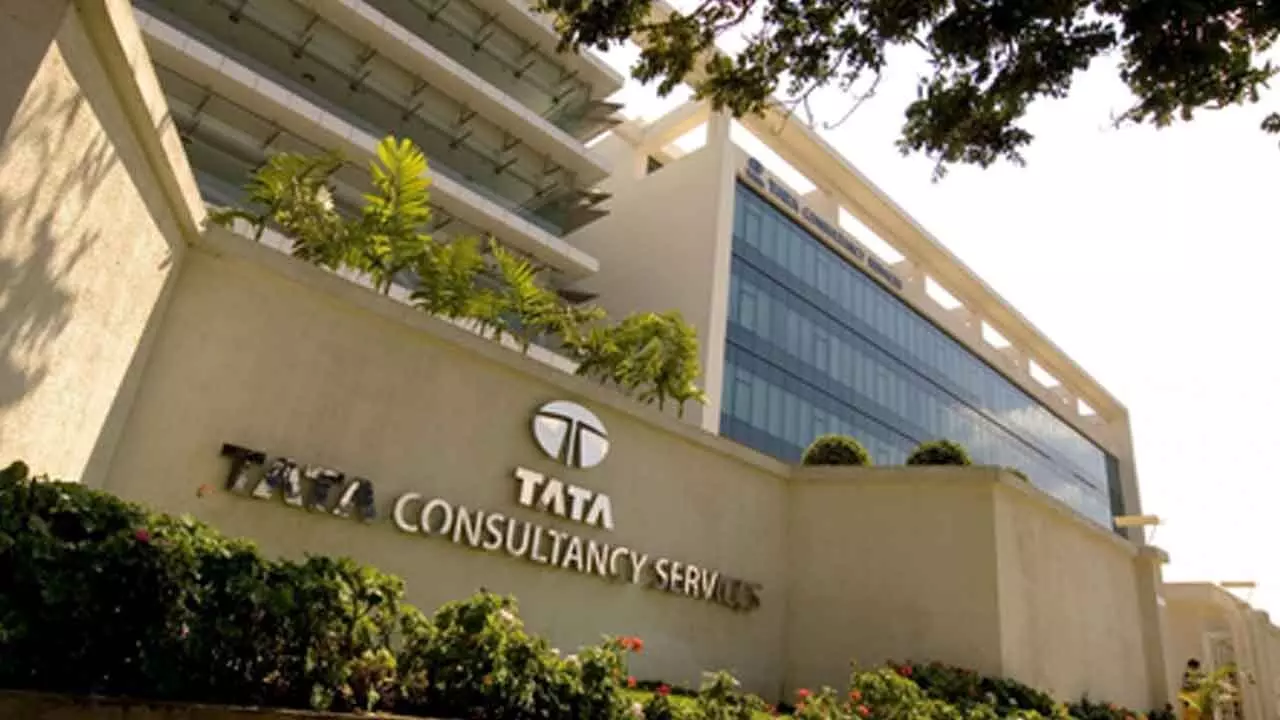
TCS plans massive AI integration, expects AI agents to equal human workforce, while traditional hiring gradually slows across operations.
India’s largest IT services company, TCS, has outlined a major shift in how it plans to operate in the coming years, placing artificial intelligence at the centre of its growth strategy. Speaking during the company’s Annual General Meeting (AGM), TCS Chairman N Chandrasekaran said the company is rapidly moving toward an AI-driven future where AI agents could eventually match the number of human employees.
The statement comes amid growing global conversations around automation, job displacement, and the changing nature of work in the technology sector. Chandrasekaran indicated that AI is already contributing significantly to the company’s business and will continue to influence hiring and operational decisions over the next few years.
According to him, TCS recorded annualised AI revenues of $2.4 billion during the final quarter of FY26. He also noted that this business segment has been growing at a compound quarterly growth rate of 22.4 percent.
Sharing his outlook, Chandrasekaran said, “At TCS, the transformation is already well underway. In the last quarter of fiscal 2026, TCS had an annualised AI revenues of $2.4 billion, which is growing at a CQGR of 22.4 per cent. I predict that over the next 3 years, TCS will have as many AI agent as human employees.”
The company currently employs more than half a million people worldwide. However, Chandrasekaran acknowledged that recruitment at the scale seen in previous years is unlikely to continue as AI adoption increases across business functions.
Addressing shareholder concerns over hiring, he said, “The company has half a million employees. The day is not far when the company will have half a million AI agents. Will it definitely lead to decrease in hiring? Absolutely. The company will not be hiring the kind of numbers it used to hire.”
Even with slower hiring, TCS maintains that people will continue to play an important role in the organisation. The company believes future opportunities will increasingly favour employees who are capable of working alongside AI systems and developing advanced AI-related skills.
The remarks follow reports that TCS reduced its workforce by nearly 26,000 employees during FY26, a much steeper decline than earlier estimates.
At the same time, Chandrasekaran stressed that AI is creating new business opportunities beyond simple automation. He highlighted several emerging growth areas, including AI governance, enterprise modernisation, sovereign AI initiatives, physical AI systems, and redesigning business processes using agentic AI technologies.
He also suggested that investors may be underestimating the long-term impact AI could have on the IT services industry.
For decades, growth in the IT sector has largely depended on expanding employee headcount. TCS now appears to be shifting toward an asset-led growth model where AI platforms and digital capabilities contribute more directly to revenue generation.
“Our focus is to get to double-digit growth on a year-on-year basis whether it happens in FY27 or FY28. If you are doing $2.3 billion AI revenue in a quarter on an annualised basis, we should look for proof points for it go to double and triple in coming quarters and automatically push annual growth rates up,” Chandrasekaran said.
The company’s comments reflect a broader transformation underway across the global technology industry, where AI is increasingly becoming both a growth engine and a workforce disruptor.
Bihar: EOU raids Hajipur Municipal Council Accountant’s premises, Rs 2 crore cash recovered
PM Modi delivering corruption-free governance: K’taka BJP
Delhi L-G orders repair of rainwater harvesting systems ahead of monsoon
World Bank lifts India growth outlook despite Gulf war
WHO releases updated heat-health action plans guidance
SC to hear Meenakshi Natarajan's plea against Rajya Sabha nomination rejection tomorrow


