






Tariff trap: India’s pharma under siege, US patients pay the price

Tariff trap: India’s pharma under siege, US patients pay the price
Imposing 200% tariffs on drugs with no viable domestic alternative may lead to rise in healthcare costs in US
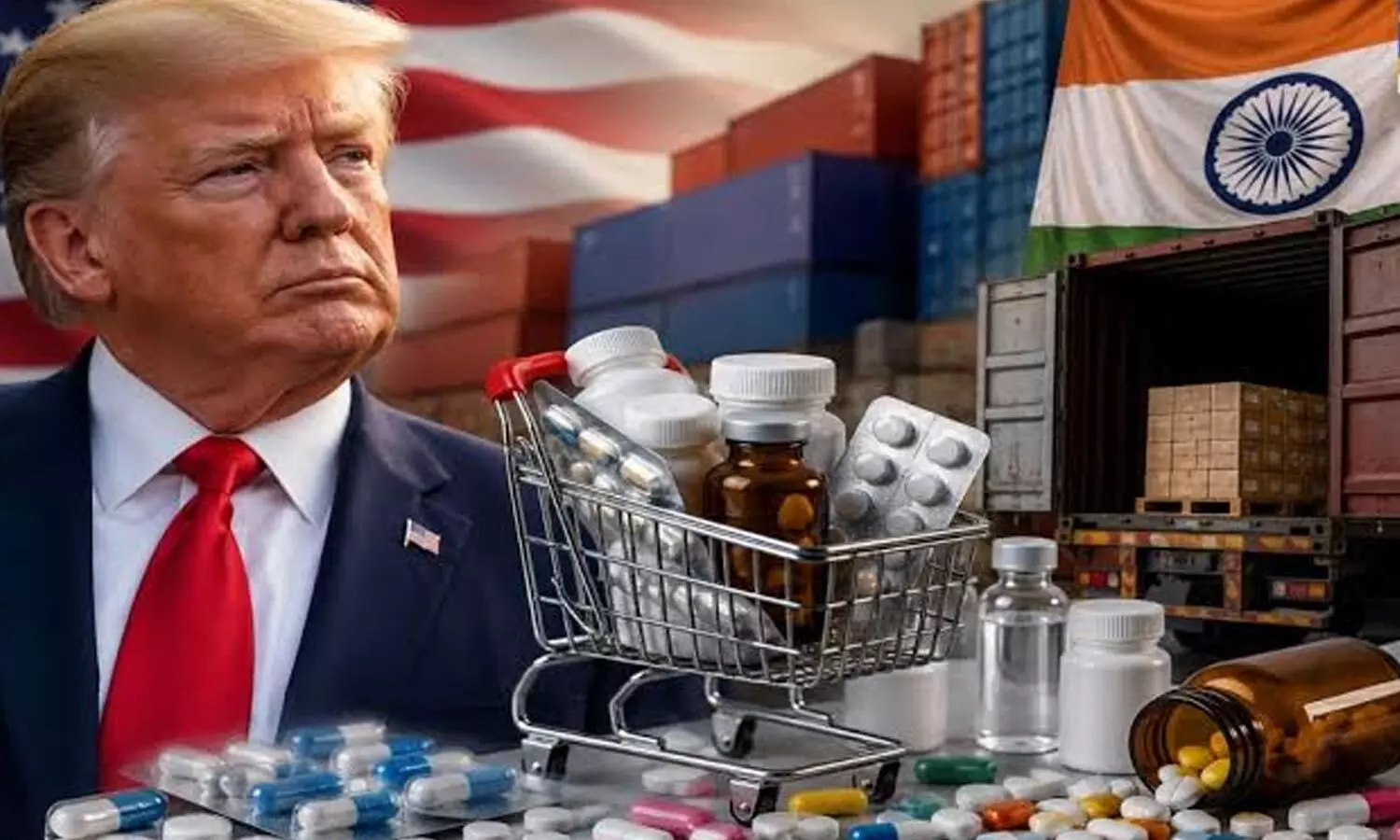
On July 21, 2026, US President Donald Trump unveiled what may be the most consequential trade action for Indian industry in decades. In a characteristically blunt post on Truth Social, he announced a three-phase tariff regime on imported generic medicines: zero tariffs until August 1, 2028, a 100 per cent levy for one year, and a staggering 200 per cent tariff thereafter. The message was unmistakable - relocate manufacturing to America or face near-prohibitive costs.
For India, the stakes could not be higher. The nation is the pharmacy of the world, and the United States is its single-largest customer. In FY2025, nearly 35 per cent of India’s pharmaceutical exports were destined for the US, with industry estimates indicating that over 95 per cent of these shipments comprised generic drugs. By value, India exported roughly $9.7 billion worth of pharmaceuticals to the US in 2025 - approximately 38 per cent of its global pharma exports of $25.8 billion. This is not merely a trade relationship; it is a structural interdependence that has shaped both nations’ healthcare economies for two decades.
Arithmetic of interdependence
The US healthcare system’s reliance on Indian generics is, by any measure, extraordinary. According to the US State Department’s May 2026 Medicine Supply Chain Security Report, approximately half of all US generic drug prescriptions are filled with products manufactured in India. US Ambassador to India Sergio Gor stated publicly in May 2026 that the US imports close to 40 per cent of its generic medicines from India, describing them as “critical, literally life-saving ingredients.” The savings are equally staggering. Reports indicate that medicines from Indian companies saved the US healthcare system $219 billion in 2022 alone, and a cumulative $1.3 trillion between 2013 and 2022. Over the next five years, Indian generics are expected to generate an additional $1.3 trillion in savings.
This deep reliance creates a paradox that both countries must now navigate. For the US, imposing 200 per cent tariffs on a product category where it has no viable domestic alternative risks immediate supply disruption and a spike in healthcare costs. For India, losing preferential access to its largest export market threatens the very business model that built its pharmaceutical giants.
Two-year window: Respite or mirage?
The two-year transition period — zero tariffs until August 2028 — offers Indian companies a critical runway. During this window, several strategic options exist.
First, the pass-through argument has genuine merit. Given that Indian manufacturers supply nearly 40-47 per cent of US generic demand, any significant reduction in supply would trigger shortages that the US healthcare system cannot easily absorb. This pricing power could enable Indian companies to pass on a portion of tariff-related cost increases to US buyers, including pharmacy benefit managers, hospital chains, and ultimately, American patients. However, this is not an inexhaustible buffer. The US generics market is intensely price-competitive, and buyers have historically wielded significant leverage.
Second, Indian companies can use the two years to accelerate their onshoring strategies. Several large players — Sun Pharma, Aurobindo, Cipla, and Dr. Reddy’s — already have manufacturing footprints in the US. The tariff announcement may accelerate investment decisions that were already under consideration. Dr. Reddy’s Laboratories, which earns approximately 45 per cent of its consolidated revenue from the US, and Aurobindo Pharma, with about 47 per cent, have the balance sheet strength to make such investments.Third, the final tariff structure remains negotiable. India and the US are engaged in ongoing trade discussions, and the pharmaceutical issue is now a central bargaining chip. The Trump administration’s own April 2026 proclamation under Section 232 provided exemptions for companies entering Most Favored Nation pricing agreements or demonstrating credible onshoring plans. A similar carve-out for Indian generics is not inconceivable, especially given the human health implications.
Risks that cannot be ignored
For all the structural strengths, the risks are real and warrant close attention. The credit profiles of Indian pharmaceutical companies are expected to remain stable in the near term, supported by strong balance sheets and the two-year implementation window. However, the tariff trajectory — zero to 100 per cent to 200 per cent — is unambiguous and escalatory. Companies with the highest US revenue exposure face the greatest business risk.
Gland Pharma, which derived 54 per cent of its consolidated revenue from the US in FY2025, is particularly vulnerable. Aurobindo and Dr. Reddy’s face similar exposure. For smaller, US-dependent players, the cost of onshoring may be prohibitive, potentially triggering consolidation in the sector.
There is also the question of profitability. Indian generics operate on wafer-thin margins — typically 8-12 per cent EBITDA. A 100 per cent tariff would effectively wipe out margins on US-bound shipments. A 200 per cent tariff would make the business model unsustainable, regardless of pass-through capability. Even the largest companies would face margin compression that could spill into their domestic operations. The April 2026 Section 232 proclamation already imposed a 100% tariff on patented drugs and key pharmaceutical ingredients, with generics exempt only for one year subject to review. The July 21 announcement now eliminates that exemption entirely, substituting a phased timeline that gives the industry until 2028 to adapt. This is a reprieve, not a pardon.
The road ahead: Strategy, not panic
The Indian pharmaceutical industry has weathered storms before - from USFDA import bans and warning letters to drug pricing controls and intellectual property challenges. Its resilience has been born of necessity and adaptation. This tariff challenge, however, is qualitatively different. It is not a regulatory hurdle but a structural disruption aimed at the very geography of production.
The most prudent response for Indian companies is threefold. First, accelerate US manufacturing investments, both greenfield and through contract manufacturing partnerships. Second, diversify export markets to reduce US dependence — Europe, Africa, and Southeast Asia offer growing opportunities. Third, participate actively in the India-US trade negotiation process, leveraging the undeniable reality that the US healthcare system cannot function affordably without Indian generics.
For New Delhi, the policy response must be equally strategic. Expanding the Production Linked Incentive (PLI) scheme for bulk drugs and active pharmaceutical ingredients, streamlining regulatory approvals, and negotiating a bilateral trade agreement with the US that grandfathers existing generic exports would all help mitigate the impact.
The tariff clock is ticking. Indian pharma has two years to prove that its famed resilience extends beyond regulatory adversity to the politics of trade. The stakes are not merely commercial. They are about whether India can retain the title of the world’s pharmacy - or whether it must learn to be something else entirely.
(The writer is with the Cholleti BlackRobe Chambers, Hyderabad, and writes on economy, politics and law)
NEET Paper Leak Fallout: Dharmendra Pradhan Steps Down as Education Minister, Says ‘I Never Shied Away From Responsibility’
AI Appreciation Day 2026: Trust and infrastructure emerge as the next frontier for AI, say experts
Few Takers for HILT Policy in Hyderabad Amid Low Response
Cockroach Janta Party Protest LIVE Updates: Demonstrators Assemble at Jantar Mantar
Fire breaks out at a building in Ameerpet of Hyderabad, fire brigade arrives
ED’s Vedanta raids raise questions about proportionality, perception


