






From Bengal to Karnataka, Oppn cracks are turning into political earthquakes
INDIA Bloc or India’s Broken Bloc?
India’s opposition today appears less like a coordinated democratic alternative and more like a collection of fragmented power centres trapped in personal rivalries, dynastic ambitions and strategic confusion. At a time when the Bharatiya Janata Party continues to expand its political dominance with remarkable organisational discipline, the opposition still seems unwilling to recognise the urgency of unity, internal reform and ideological clarity. The present political situation across several states reflects not merely electoral setbacks but a deeper structural crisis within opposition politics itself.
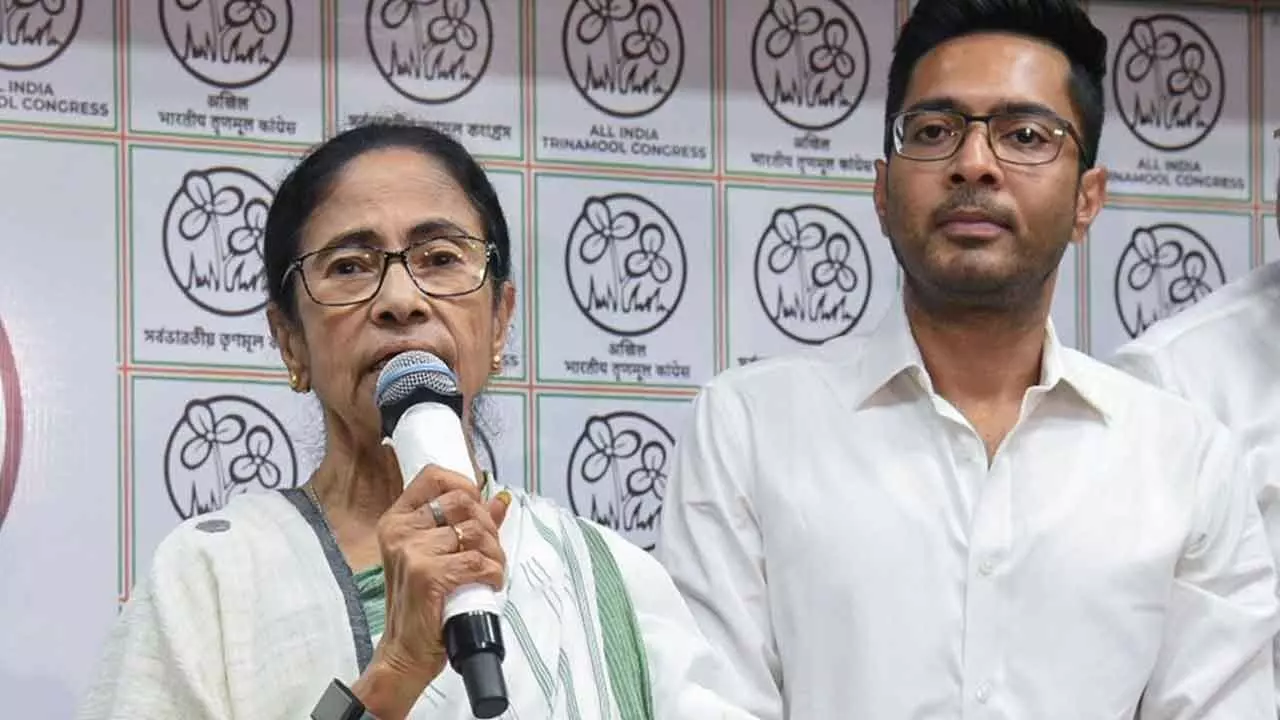
The most dramatic example is unfolding in West Bengal. For decades, Mamata Banerjee represented the image of an uncompromising street fighter, who challenged the seemingly invincible Left Front. From building the Trinamool Congress as a fragile Congress splinter to ending three decades of communist rule in 2011, her political journey has been extraordinary. She connected directly with ordinary people, mobilised anti-Left anger and projected herself as a fearless grassroots leader.
Yet the same party today appears to be facing one of the gravest internal crises in its history. Reports of large-scale defiance by MLAs, poor attendance at key meetings and growing dissatisfaction among senior leaders suggest that the problem is no longer isolated dissent but a fracture within the party structure itself. The rebellion appears directed less against Mamata Banerjee personally and more against the growing concentration of authority around Abhishek Banerjee.
The seeds of this crisis may indeed have been sown years ago when the party gradually shifted from being cadre-driven to family-centric. Many veteran leaders who once had direct access to Mamata Banerjee increasingly found themselves navigating layers of political gatekeeping. The perception that loyalty to individuals mattered more than organisational consultation weakened the emotional connect between leadership and cadre. Parties built on personal charisma often face such moments when accessibility disappears and internal democracy declines.
Moreover, governance based primarily on political dominance can create beneficiaries but not necessarily loyal ideological workers. Once electoral setbacks emerge, such structures become vulnerable because many supporters are tied more to power than conviction. The situation resembles what happened in Andhra Pradesh under Y S Jaganmohan Reddy, where excessive centralisation and perceived arrogance eventually produced strong public backlash. Voters in democratic systems often tolerate strong leadership, but they rarely tolerate prolonged political insulation from public sentiment.
Karnataka presents another illustration of the opposition’s internal contradictions. The Congress government, despite securing a strong mandate, continues to remain trapped in factional competition between supporters of Siddaramaiah and D K Shivakumar. The latter was projected as the troubleshooter who could balance organisational strength with electoral strategy. However, the resignation of Ramalinga Reddy, who is unhappy over the irrigation portfolio given to him, and the lurking threat of resignation by K N Rajanna, K H Muniyappa and Zameer indicates how there is growing resentment among Siddaramaiah loyalists. It indicates that the power-sharing arrangement within the Karnataka Congress remains fragile.
When senior leaders publicly question leadership styles, complain about unequal treatment and emphasise seniority, it exposes the absence of cohesive political management. Such public infighting damages not merely the image of the state government but also weakens the Congress nationally. A party aspiring to lead a national coalition cannot afford constant internal instability in one of the few major states where it currently governs comfortably.
Equally worrying is the visible fragmentation within the INDIA bloc itself. Several regional parties increasingly appear unconvinced about Congress leadership. The reluctance of some allies to participate in meetings, the preference among others for non-Congress alignments and recurring disagreements over strategy reveal a coalition lacking ideological coherence. Anti-BJP sentiment alone cannot sustain a durable political alliance. Coalitions survive only when there is mutual trust, clear leadership structure and a shared political narrative.
The Congress leadership also bears responsibility for this drift. Rahul Gandhi’s repeated warnings about “economic tsunami,” threats to democracy and predictions that Narendra Modi may not remain Prime Minister for long generate headlines but often fail to persuade undecided voters. Opposition politics cannot survive purely on alarmist rhetoric. Voters generally respond to credible alternatives, governance models and economic solutions rather than continuous predictions of collapse.
Many opposition leaders also appear disconnected with changing political realities. The BJP’s success is not based only on electoral machinery but also on disciplined messaging, ideological clarity, booth-level organisation and constant voter engagement. In contrast, several opposition parties still function as personality-driven entities where loyalty to family leadership overshadows institutional processes. This has weakened internal debate, discouraged emerging leaders and created cultures of sycophancy rather than accountability.
The larger danger in this situation is not merely the decline of individual parties but the weakening of democratic balance itself. A strong democracy requires a strong opposition capable of questioning the government constructively, presenting alternative policies and mobilising public opinion responsibly. If opposition parties continue to weaken themselves through internal conflicts, dynastic battles and strategic confusion, the ruling party will naturally gain further political space.
At the same time, opposition parties often make the mistake of attributing every setback entirely to the BJP. While aggressive political expansion by the BJP is undeniable, many opposition crises are self-created. Leadership rivalries, poor cadre management, over-centralisation, lack of succession planning and disconnect from grassroots workers have all contributed significantly to their decline. One cannot repeatedly offer political openings to opponents and then react with surprise when those openings are exploited effectively.
There is also growing public fatigue with perpetual outrage politics. Ordinary citizens are more concerned about inflation, employment, governance, infrastructure and local administration than endless political rhetoric. Opposition parties need to reconnect with people at the grassroots instead of relying excessively on social media campaigns, intellectual echo chambers or selective narratives amplified by cheerleaders disconnected from electoral realities.
The need of the hour is therefore not merely alliance arithmetic but structural reform within opposition parties themselves. India’s opposition requires generational change, internal democracy and decentralised leadership. Regional satraps must recognise that personal ambition cannot override collective survival. National parties must accept that coalition politics requires accommodation and humility. Dynastic politics, while still electorally relevant in parts of India, increasingly faces resistance from voters who expect merit, accessibility and accountability.
Ultimately, the BJP’s rise cannot be understood only because of opposition weakness, but opposition fragmentation has undoubtedly accelerated it. They too have their own internal troubles but if current trends continue, India may enter the 2029 election with an opposition that remains divided, reactive and strategically confused. That would not necessarily strengthen democracy, because healthy democracies depend not only on strong governments but also on credible and competent opposition forces.
The message for opposition leaders is therefore simple but urgent: stop fighting one another, reconnect with ordinary workers and voters, abandon entitlement politics, encourage internal democracy and build a coherent national vision. Without such transformation, fragmentation will deepen further, and the political imbalance in the country will continue to grow.
(The author is former Chief Editor of The Hans India)
NEET Paper Leak Fallout: Dharmendra Pradhan Steps Down as Education Minister, Says ‘I Never Shied Away From Responsibility’
AI Appreciation Day 2026: Trust and infrastructure emerge as the next frontier for AI, say experts
Few Takers for HILT Policy in Hyderabad Amid Low Response
Cockroach Janta Party Protest LIVE Updates: Demonstrators Assemble at Jantar Mantar
Fire breaks out at a building in Ameerpet of Hyderabad, fire brigade arrives
ED’s Vedanta raids raise questions about proportionality, perception


