






- Delhi Seemapuri Building Collapse: Several Feared Trapped As Rescue Operation Underway
- Claude Users Can Work Across Google Docs, Sheets and Slides In-App
- Rapido Ride Turns Into Nightmare After Captain Flees With Injured Passenger
- 7 Must-Watch OTT Releases For Your Dussehra Holidays
- ‘His Lips Turned Blue’: Dentist Recalls 45-Minute Effort To Save Flydubai Pilot Smit Machchhar
- Airtel Postpaid Plans Bring Free International Roaming From Rs 499
- 'Politics means nation building to him': Rajnath Singh on PM Modi's 25 years in public service
- 'Rising Together': India sets out vision for 2036 Olympic and Paralympic Games ambition
Doxxing is a threat to live-streaming of court proceedings
In Short
Judges increasingly face organised social media campaigns, personal attacks, edited video clips taken out of context, ideological branding, abuse directed at their family members. Lawyers and litigants suffer similar harassment. Witnesses may become reluctant to testify if every appearance becomes viral content. The result is a chilling effect on justice.

Share :
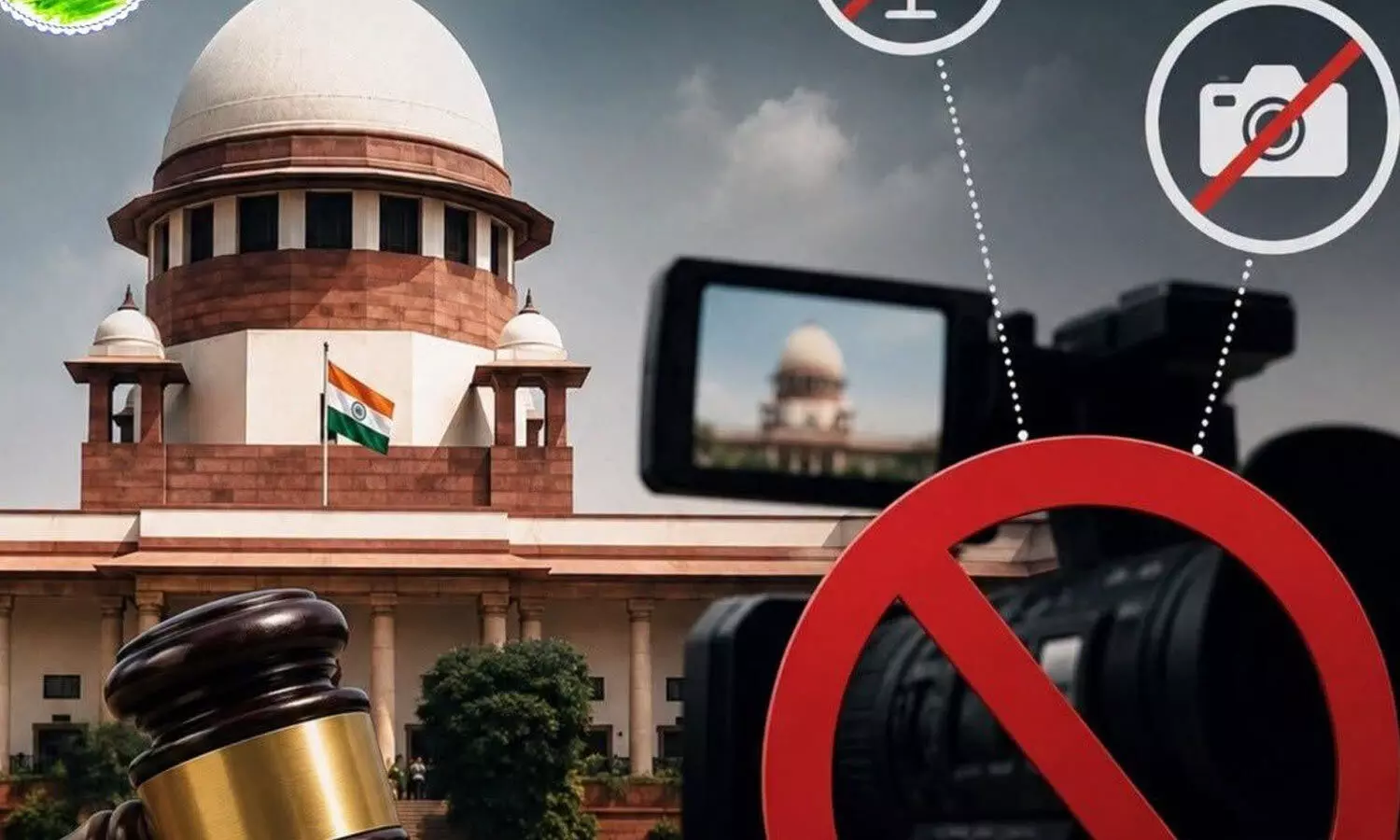
Doxxing is a threat to live-streaming of court proceedings
The Supreme Court or High Courts’ proceedings can be live-streamed, which is part of transparency and open justice. Now a new need has emerged. It has become inevitable that the Supreme Court must lay down a protocol under which online users who want to post or circulate livestreamed judicial proceedings in the top court and the State High Courts can access the audio-visual content only through the courts’ archives. This question raised by a petition is about the principle of open justice, which is one of the cornerstones of constitutional democracy. Courts do not merely deliver justice; they must be ‘seen’ to deliver justice. Public scrutiny enhances judicial accountability, public confidence, and the legitimacy of the legal system. Yet, in the digital age, open justice faces two serious threats:
Exploitation of judicial proceedings:
The challenge is not whether courts should remain open, they must. How to preserve openness without allowing abuse is the issue.
Abuse:
The livestreamed visuals of court proceedings cannot be subject to “misuse” or “commercial exploitation”. It is reasonable to have this apprehension following the expressions of the Chief Justice of India (CJI) Surya Kant wile dealing with a petition by two activists, Anjali Bhardwaj and Amrita Johri, seeking a modification of a July 24 interim order barring the circulation of livestreamed proceedings on social media and digital platforms.
Reversal of the principle of open justice:
Senior advocates of the Supreme Court Prashant Bhushan and Cheryl D’Souza opined that the July 24 order amounted to a reversal of the ‘principle of open justice’ upheld by the Supreme Court itself in a plethora of judgments. Objecting to a complete ban on dissemination of court proceedings on digital platforms, the activists said that open access to justice ensured that the judicial process remained answerable to the public and guarded against arbitrariness.
Bhushan said the order ought to be modified to direct the preservation of livestreamed content in courts’ archives so that users could access the authorised version from this source.
In response to this argument, the CJI asked, “Is that precisely the protocol we want to lay down...? We only want to prevent the misuse of the live streamed content.”
The CJI allowed petitioner’s advocates to come forward with suggestions to frame the protocol. The CJI said the exercise was not adversarial in nature. Digital platforms Meta and WhatsApp have also agreed to pitch in with suggestions. State High Courts have filed their affidavits along with Bar bodies from across the country.
The apprehension of the apex court is a serious question. The unregulated circulation of livestreamed court proceedings made judges, advocates, and litigants vulnerable to trolling and reputational harm while eroding public confidence in the judicial system.
The activists had said the concern of intentional misuse could be addressed by defining the terms and conditions of re-use, sharing, and dissemination of the recordings and livestream, rather than restricting these activities based on the nature of the user.
Vulnerability to trolling:
Judges increasingly face organised social media campaigns, personal attacks, edited video clips taken out of context, ideological branding, abuse directed at their family members. Lawyers and litigants suffer similar harassment. Witnesses may become reluctant to testify if every appearance becomes viral content. The result is a chilling effect on justice.
Commercialisation is a new threat. Live-streaming and instant digital dissemination have transformed court hearings into valuable content. It has its own serious problems.
Selective clipping of arguments to create sensational videos; Monetised YouTube channels earning advertising revenue from court proceedings; Paid subscriptions providing edited courtroom content; AI tools producing misleading summaries and headlines focusing on dramatic exchanges rather than legal reasoning.
We need open access:
The objective of open justice is public accountability—not commercial profit. Accordingly, courts may adopt a framework based on five principles. Freedom of criticism does not include intimidation. It should be ‘Official court feed as the sole authentic source’. Only the judiciary should provide the official live-stream content. Third parties should not independently broadcast courtroom proceedings. This ensures accuracy and preserves institutional integrity.
Anyone wishing to analyse hearings may do so but not make a profit from the recordings themselves. There should be contextual use only. Short clips frequently distort judicial exchanges. Any permitted excerpt should include sufficient surrounding context or link directly to the complete official recording. Misleading editing should attract legal consequences.
Live streaming need not be universal. Recordings of sensitive matters may be released after the hearing concludes. This protects witnesses, vulnerable litigants, ongoing investigations and the fairness of the trial.
Doxxing:
Platforms should respond promptly to doxxing. It is a new case of misuse. Doxxing is the act of publicly sharing private or personal information about someone online without their permission, usually to harass, threaten, or shame them. The word comes from “dropping docs” (documents), a term used by early hackers when exposing a rival’s real identity.
They may try to find the home address and phone number, personal email or workplace details, and financial data or Social Security numbers. They also may somehow find information, like public records like property deeds or marriage licenses, social media posts and profiles and hacking or data breaches.
Other types of issues are: 1. Threats; 2. manipulated videos; 3. impersonation, and 4. coordinated abuse targeting participants in judicial proceedings. These four tactics are common forms of online harassment and intimidation.
Threats:
Threats may be direct or implied promises of physical violence, financial ruin, or social harm to force individuals to change their testimony, withdraw from a case, or refuse to cooperate with law enforcement.
Manipulated videos:
Another misuse is the altered visual media, including AI-generated “deepfakes” or deceptively edited clips (cheapfakes)
Impersonation:
It is about creating fake profiles or using stolen credentials to pretend to be a specific trial participant is another threat.
The constitutional foundation:
Open justice flows from constitutional guarantees of freedom of speech, fair trial, and the rule of law. Judicial proceedings are presumptively public because:
They discourage arbitrary exercise of judicial power; They educate citizens about the administration of justice; They strengthen confidence in democratic institutions. However, openness has never been absolute.
Protecting dignity of courts:
Many democracies have adopted cautious approaches. The Supreme Court of the United Kingdom permits broadcasting under strict rules that preserve courtroom dignity. The Supreme Court of Canada provides official webcasts while maintaining institutional control. In the United States, the Supreme Court of the United States still does not permit live television coverage, instead releasing audio recordings, reflecting concerns about performative advocacy and media distortion. These examples show that transparency does not require unrestricted commercial broadcasting.
(The writer is Advisor, School of Law, Mahindra University, Hyderabad)
Dramatic face-off near Jantar Mantar. Rahul and Priyanka sit on the road
MPs vs Police. Chaos and High Drama Unfold on Delhi Roads
Henri Kagan, Kenso Soai Win 2026 Nobel Chemistry Prize for Autocatalysis
AP cabinet approves 12 agenda items
High Courts should not suggest custodial interrogation of accused, says Supreme Court
Telangana govt issues orders on DA hike


