






- Claude Users Can Work Across Google Docs, Sheets and Slides In-App
- Rapido Ride Turns Into Nightmare After Captain Flees With Injured Passenger
- 7 Must-Watch OTT Releases For Your Dussehra Holidays
- ‘His Lips Turned Blue’: Dentist Recalls 45-Minute Effort To Save Flydubai Pilot Smit Machchhar
- Airtel Postpaid Plans Bring Free International Roaming From Rs 499
- 'Politics means nation building to him': Rajnath Singh on PM Modi's 25 years in public service
- 'Rising Together': India sets out vision for 2036 Olympic and Paralympic Games ambition
- Teja Sajja’s The Traitors Telugu: Check Out The Complete List Of Contestants
Justice must not only be done but also remain beyond doubt
In Short
Some judges have set a better example. CJI B R Gavai said before taking office that he would accept no post-retirement assignment. His predecessor, Sanjiv Khanna, also said he would not accept any official role after retiring. Personal resolve of this kind deserves public respect, but it is a voluntary pledge, not a rule

Share :
Justice must not only be done but also remain beyond doubt
When a retired Supreme Court judge joins the governing body of a Reliance-backed wildlife initiative, a legitimate question arises. It is not whether he did anything wrong. It is whether the institution he served can still persuade citizens that nothing was wrong.
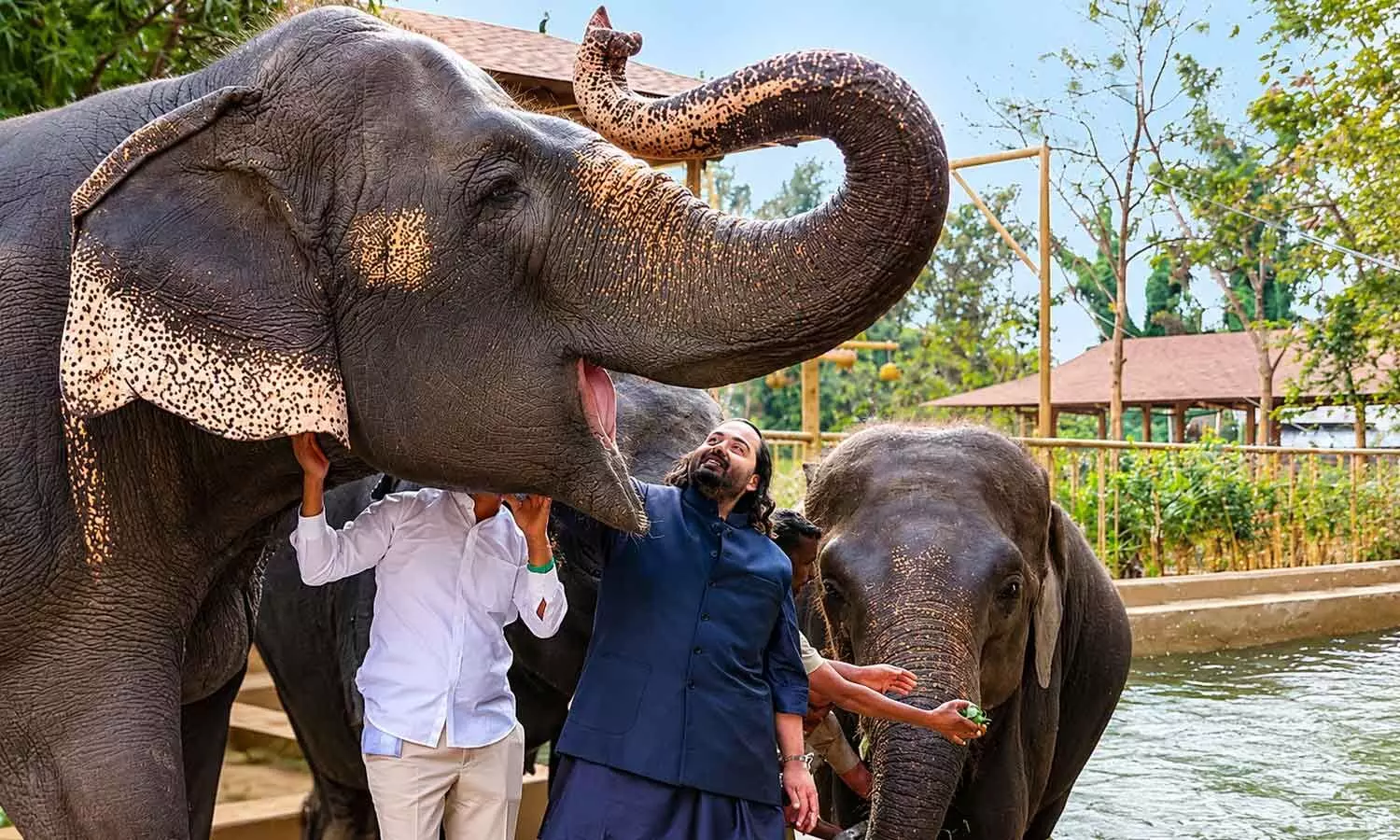
Former Supreme Court judge Justice Krishna Murari, who served on the apex court from 2019 until his retirement in 2023, joined in September 2026 the five-member Governing Council of Vantara, the animal welfare initiative of Reliance Industries and Reliance Foundation.
An investigation by Article 14 reports that he was involved in proceedings that enabled Vantara’s acquisition of elephants, its operation as a private zoo, and the nationwide expansion of a committee that oversaw elephant transfers to the facility, and that he joined its top governing body three years after retiring.
It is worth being precise about what is and is not alleged. In August 2022, Justice Murari sat on a bench that declined to interfere with a High Court order permitting elephant transfers to a temple trust later linked to Vantara. There is no general cooling-off rule preventing a retired Supreme Court judge from accepting such a private-sector or non-profit governance role. Nobody has produced evidence of a quid pro quo. The gap of three years is long by the standards of such appointments. Neither Vantara nor Justice Murari’s office responded to probing media queries. The judge may well have a complete answer, and he deserves the chance to give it.
But the matter does not end with an absence of proof. Public confidence rests on appearances, and the appearances here are uncomfortable.
A pattern, not an aberration:
Vantara is not the first such episode. It is the latest in a long line, mostly in public office rather than private enterprise.
No court has ever held, and this piece does not allege, that any specific judgment was influenced by the promise of a future post. But the recurrence of the pattern, its timing, and the judiciary’s own reluctance to self-regulate have made “post-retirement sinecures” one of the most serious credibility challenges facing India’s higher judiciary today.
Former Chief Justice of India P Sathasivam, who retired in April 2014, was appointed Governor of Kerala that November. Ranjan Gogoi, who demitted office as Chief Justice of India in November 2019, was nominated to the Rajya Sabha within months. The nomination drew sharp criticism. Opposition MPs asked whether it was a quid pro quo and how the public could have faith in judicial independence.
In February 2023, the President appointed Justice S Abdul Nazeer as Governor of Andhra Pradesh just 40 days after his retirement. He was part of the Ayodhya bench and had headed the Constitution bench that upheld demonetisation. Of the four retired judges on the Ayodhya bench, three had by then received government posts within months of their respective retirements.
In 2021, Justice Arun Mishra became NHRC chairperson almost nine months after retiring from the Supreme Court and was criticised for his earlier public praise of the Prime Minister at a judicial conference. Rights groups objected, and they said the appointment violated the Paris Principles governing national human rights institutions.
None of these judges has been shown to have decided any case with an eye on a future job. Each of them would reject the suggestion, and the law does not allow us to assume otherwise. Yet the sequence, a major judgment followed by a prized appointment, invites the very inference that a judiciary must work hardest to forestall.
The warnings were ignored:
This concern is not new. The Law Commission, in its 232nd report in 2009, observed that sitting judges seek such appointments either on the eve of their retirement or after it. In 2013, a senior parliamentarian told the Rajya Sabha that the country was going too far in creating post-retirement avenues for judges in every new legislation. Yet in 2019 the Government told the Rajya Sabha that it did not intend to make a cooling-off period mandatory.
Here the responsibility is shared. The executive offers the posts, and it is the largest litigant before the courts. Judges accept them. Private enterprises, which increasingly appear in high-stakes constitutional and regulatory litigation, now join the list of potential patrons.
The honourable exceptions:
A fair account must acknowledge two things. First, some judges have set a better example. CJI B R Gavai said before taking office that he would accept no post-retirement assignment. His predecessor, Sanjiv Khanna, also said he would not accept any official role after retiring. Personal resolve of this kind deserves public respect, but it is a voluntary pledge, not a rule. Second, retired judges bring real expertise. Tribunals, inquiry commissions and oversight bodies often need exactly that experience.
A Special Investigation Team, led by former Supreme Court judge Jasti Chelameswar, was used in the Vantara matter itself. Nobody sensible would bar retired judges from public service altogether. The argument is about timing, transparency and the nature of the post, not about whether a judge may ever work again.
What should be done:
The remedy lies in rules, not in recrimination. Three steps are worth considering.
First, a cooling-off period, perhaps two years, before a retired Supreme Court or High Court judge accepts any executive appointment, political nomination or board position in an entity that has been a party before him. Legislation or a binding Full Court resolution could provide this.
Second, disclosure norms. Judges might be required to disclose, on appointment and again on retirement, any prospect of post-retirement engagement, and to recuse themselves from matters involving potential future employers.
Third, a clear distinction between quasi-judicial roles that are statutorily meant for judges, such as tribunals, and discretionary patronage posts. The first is a necessary part of the justice system. The second is where suspicion grows.
The stakes:
The judiciary’s only real currency is public trust. The conviction that a judge’s decisions come from the law and not from expectations of reward is not a courtesy to the judge. It is the foundation of the institution.
A judge who rules fairly and later takes a position that looks like a reward has still hurt the court, even when his conscience is clear. Fairness requires that no one gains a plausible reason to doubt the judgment that came before. If the higher judiciary wants to keep its authority, it should not wait for Parliament. It can set the standard itself.
(The writer is with the Cholleti BlackRobe Chambers, Hyderabad, and writes on the economy, politics and law)
MPs vs Police. Chaos and High Drama Unfold on Delhi Roads
Henri Kagan, Kenso Soai Win 2026 Nobel Chemistry Prize for Autocatalysis
AP cabinet approves 12 agenda items
High Courts should not suggest custodial interrogation of accused, says Supreme Court
Telangana govt issues orders on DA hike
“We Will Do It”: I Live for a Mission, Not Personal Gains — PM Modi


