






- Delhi Seemapuri Building Collapse: Several Feared Trapped As Rescue Operation Underway
- Claude Users Can Work Across Google Docs, Sheets and Slides In-App
- Rapido Ride Turns Into Nightmare After Captain Flees With Injured Passenger
- 7 Must-Watch OTT Releases For Your Dussehra Holidays
- ‘His Lips Turned Blue’: Dentist Recalls 45-Minute Effort To Save Flydubai Pilot Smit Machchhar
- Airtel Postpaid Plans Bring Free International Roaming From Rs 499
- 'Politics means nation building to him': Rajnath Singh on PM Modi's 25 years in public service
- 'Rising Together': India sets out vision for 2036 Olympic and Paralympic Games ambition
NEET crisis deepens: Calls for education reforms keep mounting
In Short
Student suicides, exam irregularities and Sonam Wangchuk’s trigger debate

Share :
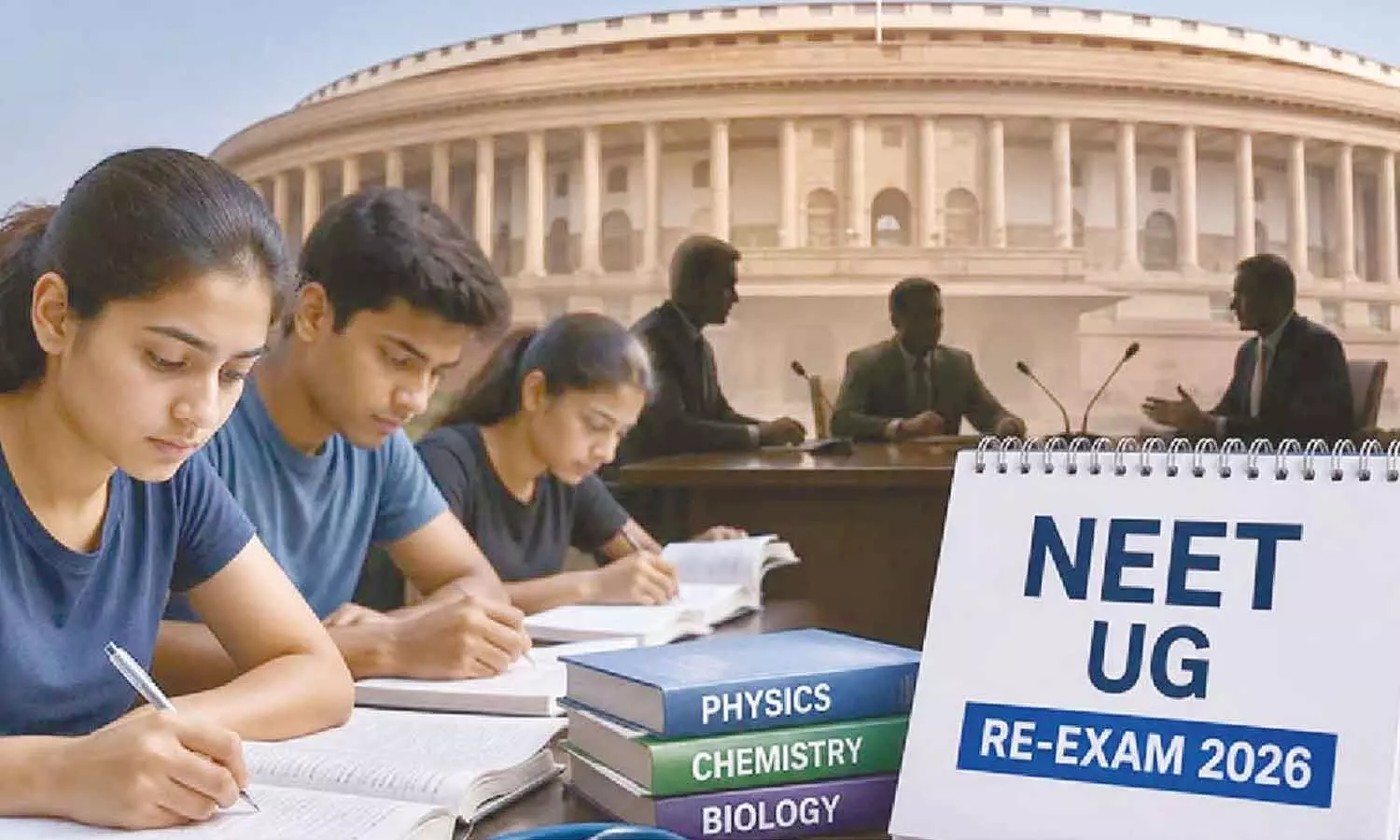
India’s examination system is facing one of its most serious credibility crises in recent years. A series of student suicides linked to NEET-UG, allegations of examination irregularities, and the indefinite hunger strike of education reform advocate Sonam Wangchuk have reignited nationwide concerns over the integrity of competitive examinations and the growing mental health burden on students.
The latest tragedy occurred in Faridabad, where an 18-year-old NEET aspirant allegedly died by suicide after estimating her score using the recently released National Testing Agency’s (NTA) answer key. According to reports, the student was devastated after realising that her expected marks were much lower than anticipated. She reportedly jumped from the 16th floor of her residential apartment, leaving everyone, including fellow aspirants, in deep shock.
The incident has once again exposed the enormous psychological pressure faced by students competing in one of India’s toughest entrance examinations. Mental health experts have repeatedly warned that prolonged academic stress, fear of failure, uncertainty, and social expectations are pushing many young aspirants into severe emotional distress. The tragedy comes amid continuing controversy surrounding the NEET-UG examination. Allegations of question paper leaks, examination irregularities, cancellations, legal disputes, and re-testing have shaken the confidence of lakhs of students and parents. Many aspirants have endured months of uncertainty over admissions, rankings, and examination outcomes, raising serious questions about the reliability of the country’s most important medical entrance examination.
Against this backdrop, educationist, innovator, and climate activist Sonam Wangchuk has launched an indefinite hunger strike at Jantar Mantar in New Delhi in support of the youth-led Cockroach Janta Party (CJP), a satirical movement demanding accountability in India’s examination system. The protest calls for action against alleged irregularities in competitive examinations, including the NEET paper leak controversy, and seeks greater institutional accountability. The movement has also demanded the resignation of Union Education Minister Dharmendra Pradhan over the ‘handling’ of examination-related issues.
As Wangchuk’s fast entered its nineteenth day, his health reportedly deteriorated significantly. Doctors monitoring his condition have stated that he has lost more than nine kg and is surviving only on water and electrolytes. Medical experts have warned that the prolonged fast could lead to serious complications, including organ damage, low blood pressure, and dangerously low blood sugar levels. Despite his worsening condition, Wangchuk has remained firm in continuing his peaceful protest unless meaningful action is taken.
Oppn slams govt’s silence:
The Union Government has so far focused on monitoring Wangchuk’s health rather than engaging with the demands of the protest. Before the Delhi High Court, the Centre assured that government doctors would continue to monitor his medical condition.
Political observers note that governments are often reluctant to concede to demands made through hunger strikes, fearing that such concessions could set precedents for future protests.
However, the government’s silence has drawn criticism from students, parents, educators, opposition leaders, and civil society organisations, who all argue that safeguarding the credibility of national examinations requires urgent policy intervention rather than administrative reassurance alone.
Educationists believe the present crisis extends far beyond a single examination. They argue that repeated controversies have weakened public confidence in the examination system and intensified anxiety among millions of young aspirants. Experts have called for transparent investigations into examination irregularities, stronger safeguards against paper leaks, independent oversight of national examinations, and greater investment in student mental health services.
The recent tragedies have become a stark reminder that success in a competitive examination should never come at the cost of a young life. As public concern continues to grow, the country awaits decisive reforms that can restore trust in India’s examination system while ensuring that the aspirations of millions of students are protected with fairness, transparency, and compassion.
Dramatic face-off near Jantar Mantar. Rahul and Priyanka sit on the road
MPs vs Police. Chaos and High Drama Unfold on Delhi Roads
Henri Kagan, Kenso Soai Win 2026 Nobel Chemistry Prize for Autocatalysis
AP cabinet approves 12 agenda items
High Courts should not suggest custodial interrogation of accused, says Supreme Court
Telangana govt issues orders on DA hike


