






Poultry legend Ponnala Lakshmaiah in the forefront of development initiatives

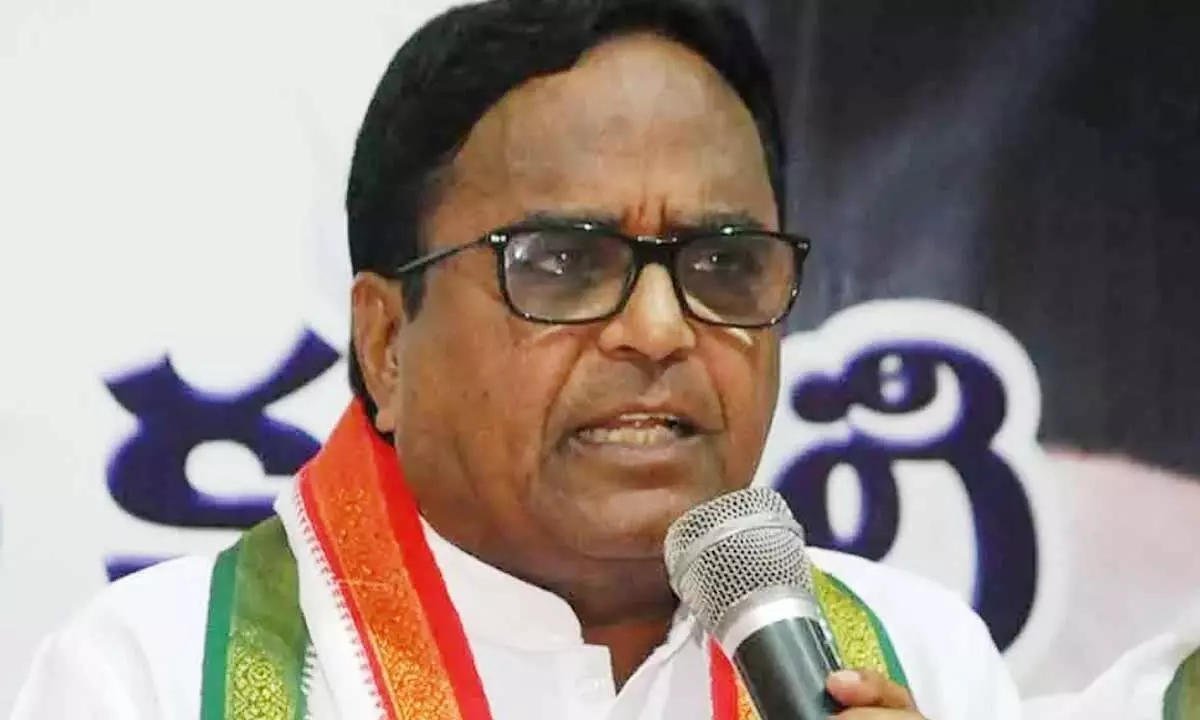
Ponnala Lakshmaiah
Formerminister and the first TPCC (I) President Ponnala Lakshmaiah even at the age of 82 demonstrates his inimitable memory, precision, flexibility, expressivity, and comprehension so meticulously that the listeners are left spellbound. Every meeting with him is an enthralling ‘learning experience.’
Despite knowing Ponnala for over two decades, and more closely recently, many of his multi-faceted avocations and contacts with Prof Jayashankar, Prof Janardhan Rao, P V Narasimha Rao and Dr Manmohan Singh, extensive knowledge of Telangana irrigation projects is less known to me. His life reflects a steady journey from rural deprivation to purposeful public service.
Born in drought-prone Quilashapur, he grew up amidst agrarian hardship, where water scarcity defined existence. His steady rise through education and professional achievement demonstrates the transformative power of perseverance when supported by mentors and determination.
A person with a difference:
Lakshmaiah pursued higher education with distinction and moved to the USA for higher studies, excelling in a rewarding engineering role within aerospace research. He returned to India, leaving a prosperous career abroad, after nearly a decade.
His return was not an act of renunciation, but a deliberate step toward catalyzing social and economic development, particularly for rural communities like the one that shaped his own resilient and determined character. This decision marked a pivotal turning point.
Recognizing agricultural limitations in drought-affected regions, he sought alternative avenues for sustainable livelihoods. Offering low investment and reliable income for rural households, Ponnala initially promoted poultry farming.
This generated significant employment and strengthened the poultry sector, eventually earning him recognition as a leading industry contributor. His pioneering efforts in this field earned him the ‘Poultry Legend of India’ honour, marking him as a leader who consistently prioritized grassroots economic empowerment. His work illustrated a practical approach to rural development, identifying locally viable solutions that delivered consistent economic benefits. He also promoted dairy development as a complementary rural enterprise and helped increase milk production and create additional income for farmers.
Water remained central to his vision for transformation. He became actively involved in movements improving irrigation access. His participation in initiatives like the ‘Godavari Jala Sadhana Samithi’ reflected a sustained effort in addressing regional inequities. Additionally, he supported localized interventions, including watershed development, check dam construction, and water body restoration. These measures enhanced groundwater levels, improved agricultural prospects, and ensured environmental sustainability demonstrating his commitment.
As Minister for Irrigation, during Dr Y S Rajasekhara Reddy’s tenure as the Chief Minister, he played a crucial role advancing large-scale water infrastructure projects, contributing to the conceptualization and execution of initiatives that expanded irrigation coverage statewide, thereby fulfilling a lifelong mission to bring sustainable water solutions to drought-prone regions. Most notable, recalls Ponnala, was the ‘Jalayagnam Program,’ which accelerated irrigation development through a comprehensive project network.
His technical background and grassroots understanding enabled him to contribute meaningfully to the planning. The initiative reflected a broader philosophy: infrastructure designed with long-term vision can transform agricultural productivity and rural livelihoods. His involvement ensured these large-scale projects remained grounded in the practical needs of the farming communities.
Contributions beyond irrigation:
In healthcare, his efforts identifying children requiring critical heart surgeries helped shape the early conceptual framework for the AarogyaSri Health Scheme. By advocating systematic treatment mechanisms, he pioneered a model providing financial protection for medical care to economically vulnerable populations. Similarly, his deep engagement with rural housing and village development influenced the evolution of programs like ‘Indiramma Illu,’ which successfully provided essential housing and basic amenities to thousands of disadvantaged families across the state. His work illustrated a practical approach to rural development, identifying locally viable solutions that delivered consistent economic benefits, and reflected his deep understanding of the challenges faced by agrarian communities.
Lakshmaiah’s approach is combined methodological insight, organizational involvement, and an understanding of ground realities. His journey illustrates how individual initiative, aligned with public purpose, yields lasting impact. His life is not a series of isolated achievements but a continuum addressing interconnected challenges: livelihoods, water, health, and infrastructure. These efforts’ outcomes extend beyond immediate visibility, influencing systems and opportunities that benefit future generations, marking a legacy of dedication to the sustainable progress of society.
PV Narasimha Rao, under whose guidance he joined the Indian National Congress, encouraged him to enter public life. Lakshmaiah was elected to the Legislative Assembly and served in pivotal roles, including as a minister. His journey, shaped initially by PV Narasimha Rao and continuing through evolving political contexts including his later association with K Chandrashekar Rao, reflects a remarkable adaptability anchored in consistent public purpose. Throughout his public career, including tenure as President of the Telangana Congress Committee, he managed organizational responsibilities during critical political phases.
Equally significant are the formative experiences that shaped his outlook. Witnessing a village tank’s restoration in childhood and observing major dam constructions during his student years fostered an early appreciation for water’s transformative potential. These impressions anchored his professional and political priorities, reinforcing a lifelong focus on irrigation and rural development as essential pillars for regional progress and social equity. His story serves as a factual account and a broader message. It demonstrates that meaningful change results from sustained, cumulative contributions rather than singular acts.
Through vision, persistence, and grounded action, Lakshmaiah’s life reflects how one individual’s commitment can contribute to the long-term progress of society, leaving an indelible mark on his homeland.
His clarity and grounded experience earned him significant leadership confidence, reflected in the respect with which he was widely addressed as ‘Mantri Saab.’ Beyond formal roles, certain moments capture the spirit of his engagement and visionary continuity. One such was the Srisailam temple episode, where a reflective exchange on large-scale irrigation possibilities occurred, stands as a symbolic precursor to his transformative agenda. Earlier, his contributions to rural enterprise, advancing poultry as a sustainable livelihood model, brought recognition and tangible economic benefits to countless families.
His trajectory demonstrates that when personal experience, technical understanding, and public intent converge, they produce outcomes that serve society over generations. In that sense, Ponnala Lakshmaiah’s work stands not only as a record of achievement but as a powerful reminder that sustained individual commitment can quietly, yet decisively, influence the course of collective progress and inspire future leaders.
Last but not the least, the best part of conversations with Lakshmaiah, was the revelation made by him. He recalled that, it was he, after Bhupathi Krishna Murthy, who first raised the voice for Telangana State with the blood boiling slogan of ‘Vishala Andhra Vaddu, Telangana Muddu (Do not want United Andhra, instead prefer only Telangana)’ in his school days as far back as in the year 1955 itself.
He also recollected that, in 1964, five years before the 1969 first phase of recorded Telangana statehood agitation, he had demanded ‘Andhra Vice-Chancellor DS Reddy go back.’ This ‘heart-touching slogan’ which eventually took off and became popular, served as an early catalyst for the 1969 Telangana Movement, recalled Lakshmaiah.
NEET Paper Leak Fallout: Dharmendra Pradhan Steps Down as Education Minister, Says ‘I Never Shied Away From Responsibility’
AI Appreciation Day 2026: Trust and infrastructure emerge as the next frontier for AI, say experts
Few Takers for HILT Policy in Hyderabad Amid Low Response
Cockroach Janta Party Protest LIVE Updates: Demonstrators Assemble at Jantar Mantar
Fire breaks out at a building in Ameerpet of Hyderabad, fire brigade arrives
ED’s Vedanta raids raise questions about proportionality, perception


