






- Delhi Seemapuri Building Collapse: Several Feared Trapped As Rescue Operation Underway
- Claude Users Can Work Across Google Docs, Sheets and Slides In-App
- Rapido Ride Turns Into Nightmare After Captain Flees With Injured Passenger
- 7 Must-Watch OTT Releases For Your Dussehra Holidays
- ‘His Lips Turned Blue’: Dentist Recalls 45-Minute Effort To Save Flydubai Pilot Smit Machchhar
- Airtel Postpaid Plans Bring Free International Roaming From Rs 499
- 'Politics means nation building to him': Rajnath Singh on PM Modi's 25 years in public service
- 'Rising Together': India sets out vision for 2036 Olympic and Paralympic Games ambition
Preserving TG’s tribal glory, the Adya Kala way
In Short
Discover Adya Kala, a unique museum and cultural initiative by Prof Jayadhir Thirumala Rao dedicated to preserving Telangana's rich, endangered tribal heritage and indigenous musical traditions.

Share :
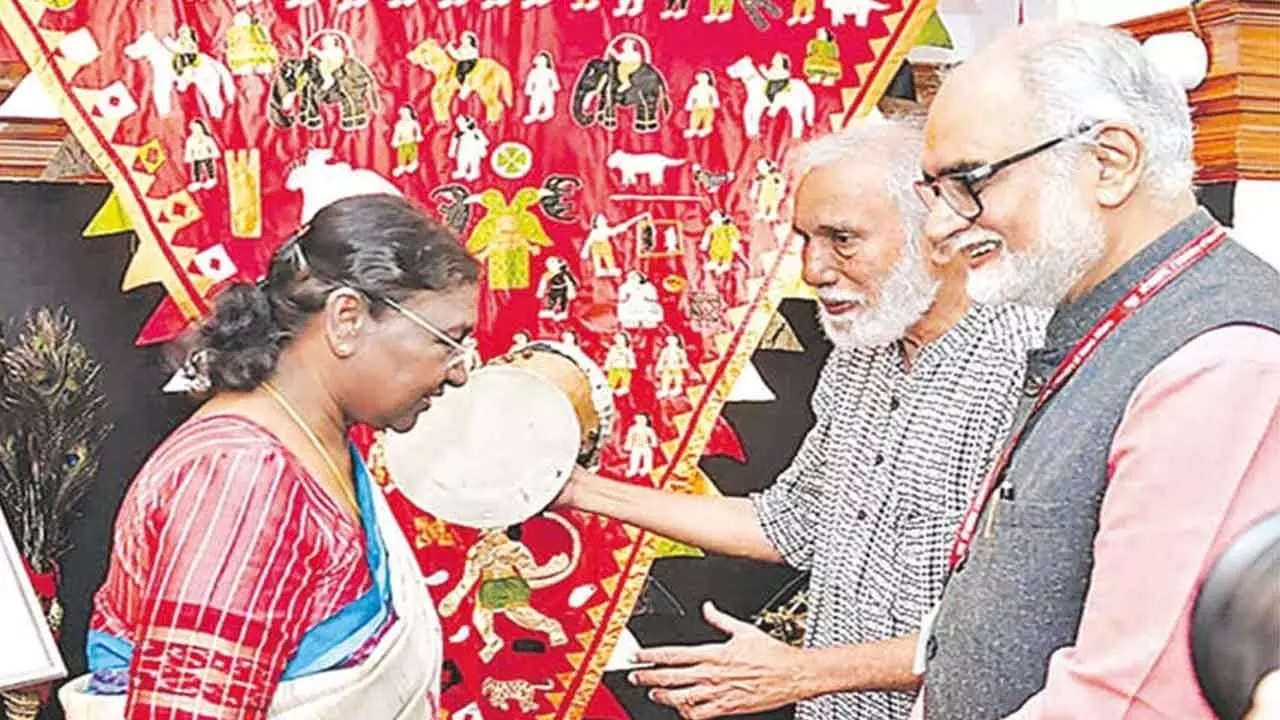
Telangana is home to a rich and diverse tribal heritage that has been preserved for centuries through music, dance, storytelling, handicrafts, and oral traditions. Communities such as Gonds, Koyas, Chenchus, Lambadas, and Thotis have nurtured unique cultural practices that reflect their close relationship with nature and their collective wisdom. However, rapid urbanisation, changing lifestyles, and the influence of modern entertainment have placed many of these traditions at extinction risk.
To preserve this invaluable heritage, eminent folklorist and cultural researcher Prof Jayadhir Thirumala Rao established Adya Kala, a unique museum and cultural initiative dedicated to documenting and showcasing Telangana’s tribal and folk traditions. Built on more than four decades of field research, Adya Kala serves as a living archive of indigenous culture and a reminder of the importance of safeguarding cultural diversity.
The museum houses a remarkable collection of tribal and folk artifacts, including rare musical instruments, leather puppets, ancient manuscripts, handicrafts, ritual objects, agricultural tools, and household items. These exhibits offer insights into the everyday lives, beliefs, and artistic expressions of tribal communities across Telangana. More importantly, they preserve traditions that are gradually fading from public memory.
One of the most significant components of Adya Kala is Adi Dhwani, a special exhibition dedicated to tribal and folk musical instruments. Combining live performances with rare instrument displays, the exhibition celebrates the musical heritage of indigenous communities and highlights the craftsmanship involved in creating these instruments.
Among the rare instruments showcased is the Kinnera, a multi-stringed folk veena traditionally made from bamboo and dried gourds. For generations, it was used by wandering bards to narrate community histories and folklore. The exhibition also features Thudum, a percussion instrument central to the musical traditions of the Gond and Koya tribes, and the Runja, an indigenous instrument associated with storytelling performances. Another important exhibit is the Kikri, a violin-like string instrument played by the Thoti community during rituals and devotional events.
These instruments are more than musical tools; they represent centuries of indigenous knowledge, artistic skill, and cultural identity. Crafted from natural materials such as bamboo, gourds, wood, and animal hide, they reflect the deep ecological understanding of tribal artisans.
Telangana’s tribal heritage extends beyond music. Traditional performances such as the Gussadi dance of the Raj Gonds, the Jamba Puranam accompanied by Kinnera, and Dakkali Kathas preserve history, mythology, and social memory through oral storytelling. These art forms have long served as vehicles for transmitting knowledge and strengthening community bonds.
Despite their cultural significance, many of these traditions are in decline. Younger generations often seek alternative livelihoods because traditional arts no longer provide sustainable income. The availability of natural materials required for instrument-making has also diminished due to environmental changes and urban expansion. In addition, television, cinema, and digital media have gradually replaced many traditional forms of entertainment, reducing opportunities for folk artists and storytellers.
Against this backdrop, Prof Thirumala Rao’s work assumes immense significance. Over the past 45 years, he has travelled extensively through remote villages and tribal settlements, documenting oral traditions, collecting rare artifacts, and preserving endangered musical instruments. His efforts have ensured that invaluable aspects of Telangana’s cultural heritage are not lost forever.
The significance of Adya Kala has been recognized nationally. Artifacts from its collection have been displayed at prestigious venues, including the Salar Jung Museum in Hyderabad and Rashtrapati Bhavan in New Delhi. A notable moment came when President Droupadi Murmu inaugurated the “Janjatiya Darpan” Gallery at Rashtrapati Bhavan. Developed by the Indira Gandhi National Centre for the Arts (IGNCA), the gallery celebrates the shared cultural traditions of India’s tribal communities. The inclusion of artifacts from Adya Kala in this prestigious space highlights the national importance of Telangana’s indigenous heritage.
Adya Kala is not merely a museum; it is a cultural movement dedicated to preserving the voices, memories, and artistic traditions of tribal communities. Through exhibitions, live performances, documentation, and public outreach, it creates awareness about the need to protect endangered cultural practices and inspires younger generations to appreciate their heritage.
Traditional musical instruments and folk-art forms are more than museum objects. They embody the history, spirituality, creativity, and collective memory of communities that have contributed significantly to India’s cultural landscape. Every melody played on a Kinnera, and every rhythm produced by a Thudum carries stories that connect the present with the past.
As Telangana continues to modernize, initiatives such as Adya Kala and Adi Dhwani remind us that development and cultural preservation must go hand in hand. Protecting tribal heritage is not only about conserving artifacts; it is about safeguarding identities, knowledge systems, languages, and artistic traditions that form an integral part of India’s cultural legacy. Through the vision and dedication of Prof Jayadhir Thirumala Rao, these priceless traditions continue to inspire and educate future generations.
Dramatic face-off near Jantar Mantar. Rahul and Priyanka sit on the road
MPs vs Police. Chaos and High Drama Unfold on Delhi Roads
Henri Kagan, Kenso Soai Win 2026 Nobel Chemistry Prize for Autocatalysis
AP cabinet approves 12 agenda items
High Courts should not suggest custodial interrogation of accused, says Supreme Court
Telangana govt issues orders on DA hike


