






- Claude Users Can Work Across Google Docs, Sheets and Slides In-App
- Rapido Ride Turns Into Nightmare After Captain Flees With Injured Passenger
- 7 Must-Watch OTT Releases For Your Dussehra Holidays
- ‘His Lips Turned Blue’: Dentist Recalls 45-Minute Effort To Save Flydubai Pilot Smit Machchhar
- Airtel Postpaid Plans Bring Free International Roaming From Rs 499
- 'Politics means nation building to him': Rajnath Singh on PM Modi's 25 years in public service
- 'Rising Together': India sets out vision for 2036 Olympic and Paralympic Games ambition
- Teja Sajja’s The Traitors Telugu: Check Out The Complete List Of Contestants
Engineering student develops smart goggles for visually impaired swimmers
In Short
Called Untethered, the device uses ultrasonic sensing to estimate the swimmer’s distance from the pool wall.

Share :
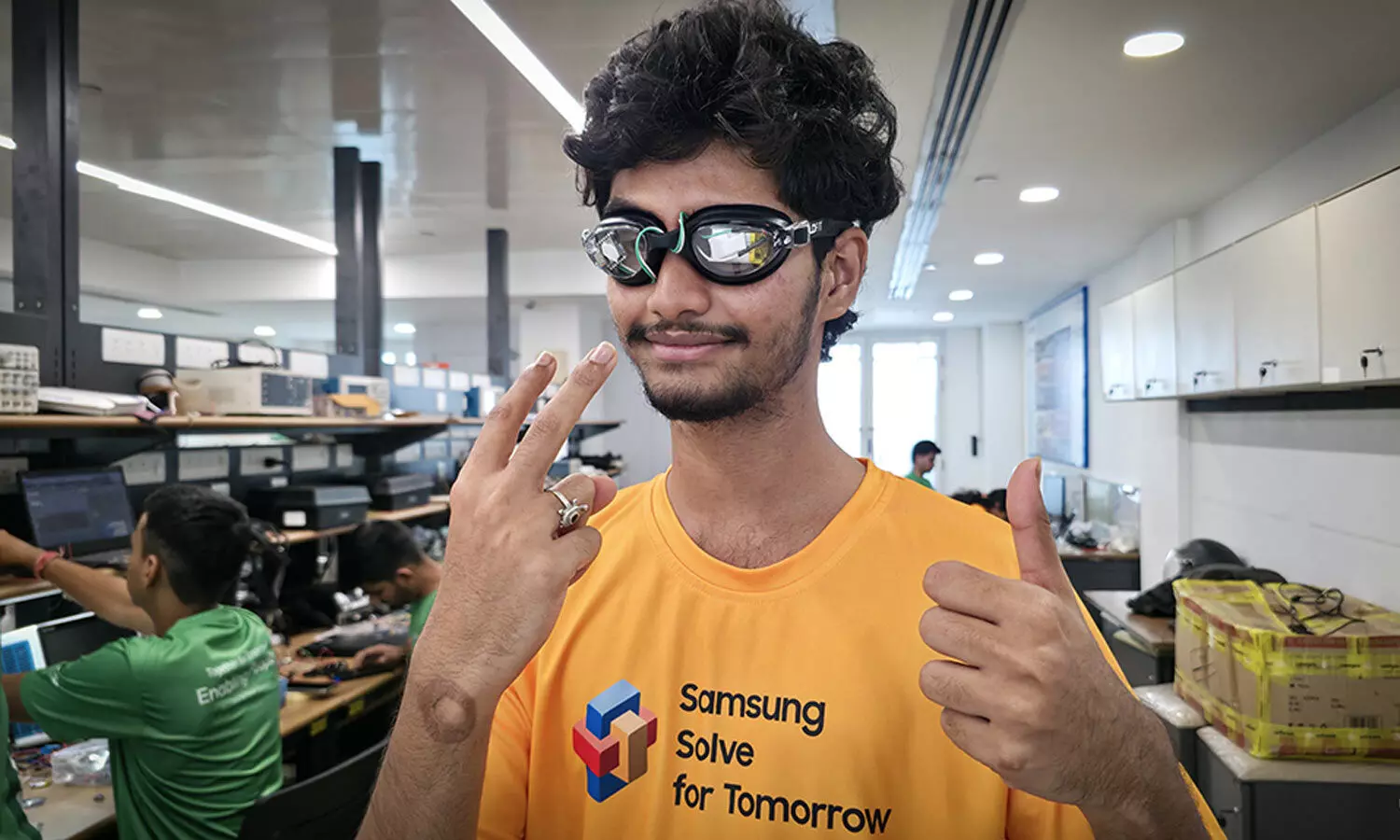
Pasupuleti Ruthvik
Chittoor: Twenty-year-old engineering student Pasupuleti Ruthvik from Chittoor, Andhra Pradesh, has developed a prototype of smart goggles designed to alert visually impaired swimmers when they are approaching the end of a swimming pool.
Called Untethered, the device uses ultrasonic sensing to estimate the swimmer’s distance from the pool wall. It then provides a haptic alert, allowing the swimmer to receive a physical indication as they approach the wall. The idea emerged from Ruthvik’s interest in swimming and a personal experience involving a friend who suffered a concussion in an accident. The incident prompted him to think about how technology could be used to reduce the risk of injuries and support greater independence for people participating in sports. “I started thinking about how technology could prevent injuries and help people participate in activities without constantly depending on someone else,” Ruthvik said.
The project is among the Top 20 teams selected for Samsung Solve for Tomorrow 2026, a national innovation programme in which young participants work on technology-based solutions to identified problems.
For Ruthvik, participation in the programme also changed the way he approached the project. Initially, his focus was primarily on whether the technology could be developed. During the programme’s bootcamp and mentoring sessions, he began considering the needs and experiences of the intended users.
“Earlier, I was asking, ‘Can I make this technology work?’ The Bootcamp made me ask, ‘Who will use it? What problem are they actually facing? Will it make their lives better, and would they want to use it?’” he said.
This shift brought greater attention to aspects such as comfort, usability and practical application. Rather than looking at the goggles only as an engineering exercise, Ruthvik began considering how the device would function for swimmers in an actual pool environment.
The use of ultrasonic sensing allows the system to detect the distance between the swimmer and the pool wall without requiring the swimmer to rely on visual information. The haptic feedback is intended to communicate the warning through physical sensation.
Ruthvik said the mentoring sessions helped him examine the project from both technical and user perspectives. “My mentors helped me understand what was technically possible and how I could approach the problem differently,” he said. The project also reflects Ruthvik’s interest in combining engineering with sports. He said his interest in entrepreneurship developed after joining engineering college, where he began thinking about identifying practical problems and developing solutions rather than viewing entrepreneurship only as starting a business.
The next stage for Untethered would involve further development and testing to understand how effectively the system performs in different swimming environments and how comfortable it is for users.
For students working on technology projects, Ruthvik’s experience highlights the importance of considering the people who will eventually use a product. An engineering solution may begin with a technical idea, but questions around safety, usability, accessibility and practical conditions can shape how that idea develops. Untethered remains a student-led prototype at this stage. Its development illustrates how an everyday problem in sports can become a starting point for exploring assistive technology and user-centred engineering.
MPs vs Police. Chaos and High Drama Unfold on Delhi Roads
Henri Kagan, Kenso Soai Win 2026 Nobel Chemistry Prize for Autocatalysis
AP cabinet approves 12 agenda items
High Courts should not suggest custodial interrogation of accused, says Supreme Court
Telangana govt issues orders on DA hike
“We Will Do It”: I Live for a Mission, Not Personal Gains — PM Modi


