






- 'Is democracy in India being undermined like China, Russia and North Korea': Gehlot on FIR against Rahul, Priyanka Gandhi
- Delhi Seemapuri Building Collapse: Several Feared Trapped As Rescue Operation Underway
- Claude Users Can Work Across Google Docs, Sheets and Slides In-App
- Rapido Ride Turns Into Nightmare After Captain Flees With Injured Passenger
- 7 Must-Watch OTT Releases For Your Dussehra Holidays
- ‘His Lips Turned Blue’: Dentist Recalls 45-Minute Effort To Save Flydubai Pilot Smit Machchhar
- Airtel Postpaid Plans Bring Free International Roaming From Rs 499
- 'Politics means nation building to him': Rajnath Singh on PM Modi's 25 years in public service
How India’s Water Expansion Is Putting New Pressure on the Network
In Short
India’s rapid water infrastructure expansion is straining existing distribution networks, raising concerns over sustainability, supply efficiency, and future resource management challenges.

Share :
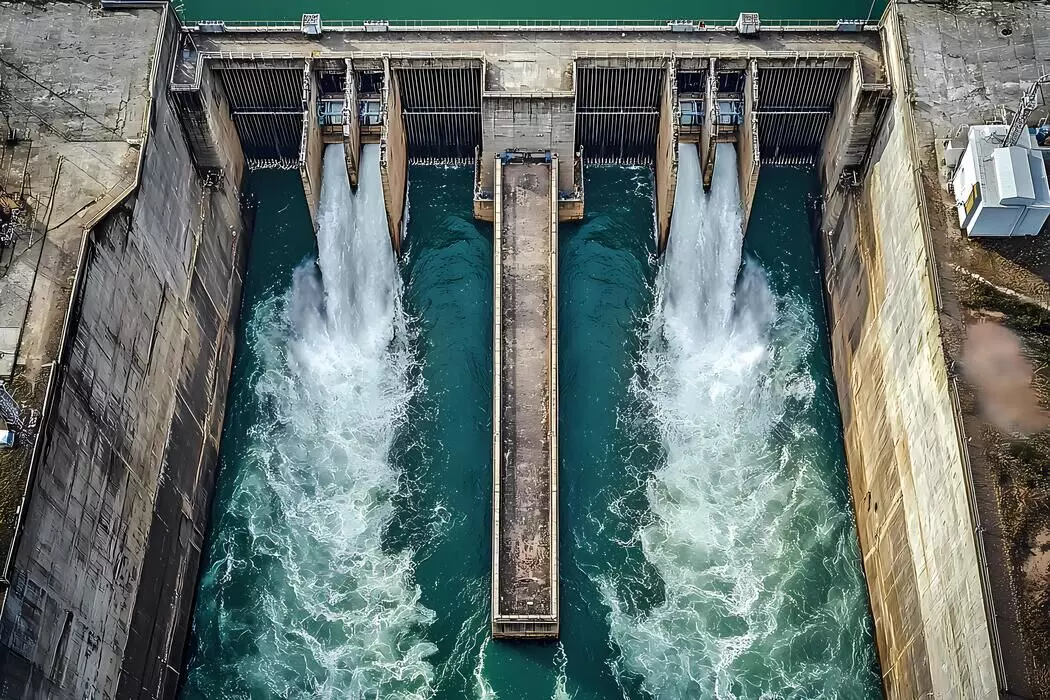
India’s water infrastructure push is often presented as a story of scale. New connections, bigger budgets, more pipe laying, faster implementation. And at one level, that is true. Few countries are trying to expand water access at this pace and across such a wide geographic and operational range.
But there is another side to this story, and it receives far less attention.
The challenge is not only getting water into the network. It is keeping that network stable once it starts operating under real conditions — across uneven terrain, expanding cities, older pipelines, and growing demand. In that environment, pressure becomes a defining issue.
When pressure is poorly managed, the consequences are rarely dramatic at first. They show up as recurring leaks, localized bursts, service inconsistency, stressed joints, higher maintenance loads, and water that never reaches the end user. In many systems, these are not isolated faults. They are symptoms of networks being asked to do more than they were originally designed for.
That is part of what makes the current phase of India’s water development so important. The conversation is slowly shifting from pure expansion to performance. Building more infrastructure is one challenge. Making it work efficiently over time is another.
This is where pressure control starts to matter a lot more than it may seem from the outside.
In practical terms, one of the most important tools in this area is the use of hydraulic control valves, especially in systems where pressure varies sharply between zones or changes quickly during operation. These are the kinds of components that rarely make headlines, yet they often determine whether a network runs smoothly or becomes expensive to maintain.
Pressure-reducing valves are a good example. Their role is straightforward: they lower incoming pressure to a safer downstream level. But the engineering value is much bigger than that simple description suggests. In the right place, they help reduce pipe stress, stabilize flow conditions, and limit the kind of hydraulic strain that shortens system life.
In India, that matters because the operating conditions are rarely simple. Water networks may run through hilly terrain, dense urban environments, peripheral growth zones, industrial areas, or mixed-age utility systems where newer assets connect to older infrastructure. A network like that cannot be treated as hydraulically uniform. It has to be managed in sections, with pressure controlled according to what each part of the system can actually handle.
That is especially relevant at a time when utilities are under pressure of their own: to improve delivery, reduce losses, and justify large infrastructure spending with better long-term outcomes.
There is also a wider point here. For years, valves in many projects were often viewed mainly as standard hardware — necessary, but not strategic. That mindset is changing. In water infrastructure today, the difference between a generic component and a performance-driven control solution can have a real operational impact.
It is one reason manufacturers focused on water applications, including companies such as Aquestia, are increasingly relevant to markets where infrastructure investment is maturing. The need is no longer just for equipment that opens and closes. It is for solutions that are selected according to pressure zones, flow conditions, network design, and long-term reliability.
This applies well beyond urban distribution. Irrigation systems, industrial water lines, and fire protection networks all depend on stable hydraulic conditions. When pressure moves outside the required range, performance drops and risk rises. In that sense, pressure control is not a narrow technical issue. It cuts across multiple sectors that depend on water infrastructure working properly, not just existing on paper.
India’s water sector is entering a more demanding stage now. The early emphasis was understandably on reach, access, and rollout. The next stage is about resilience. Systems must not only be commissioned; they must continue to perform under stress, over time, and at scale.
That is why pressure control deserves more attention than it usually gets. It sits in the background, but it influences some of the most visible outcomes: leakage, reliability, maintenance burden, and service consistency.
India’s water buildout is one of the biggest infrastructure stories in the world. But the success of that story will depend not only on how much is built, but on how well it functions once the pressure is on.
India condemns attacks on commercial vessels in Black Sea, reiterates call for dialogue and diplomacy
'Is democracy in India being undermined like China, Russia and North Korea': Gehlot on FIR against Rahul, Priyanka Gandhi
SSB pays tribute to bravehearts killed in Maoist attack 15 years ago
SSB pays tribute to bravehearts killed in Maoist attack 15 years ago
Pixel Moments to Politics For Cong As BJP Celebrates Modi@25
Dramatic face-off near Jantar Mantar. Rahul and Priyanka sit on the road
MPs vs Police. Chaos and High Drama Unfold on Delhi Roads
Henri Kagan, Kenso Soai Win 2026 Nobel Chemistry Prize for Autocatalysis
AP cabinet approves 12 agenda items
High Courts should not suggest custodial interrogation of accused, says Supreme Court


