






- Delhi Seemapuri Building Collapse: Several Feared Trapped As Rescue Operation Underway
- Claude Users Can Work Across Google Docs, Sheets and Slides In-App
- Rapido Ride Turns Into Nightmare After Captain Flees With Injured Passenger
- 7 Must-Watch OTT Releases For Your Dussehra Holidays
- ‘His Lips Turned Blue’: Dentist Recalls 45-Minute Effort To Save Flydubai Pilot Smit Machchhar
- Airtel Postpaid Plans Bring Free International Roaming From Rs 499
- 'Politics means nation building to him': Rajnath Singh on PM Modi's 25 years in public service
- 'Rising Together': India sets out vision for 2036 Olympic and Paralympic Games ambition
Ganesh Chaturthi 2026: The birth story of lord Ganesha and its significance
In Short
Explore the mythological birth story, rich history, and cultural significance of Ganesh Chaturthi, celebrating Lord Ganesha as the remover of obstacles.

Share :
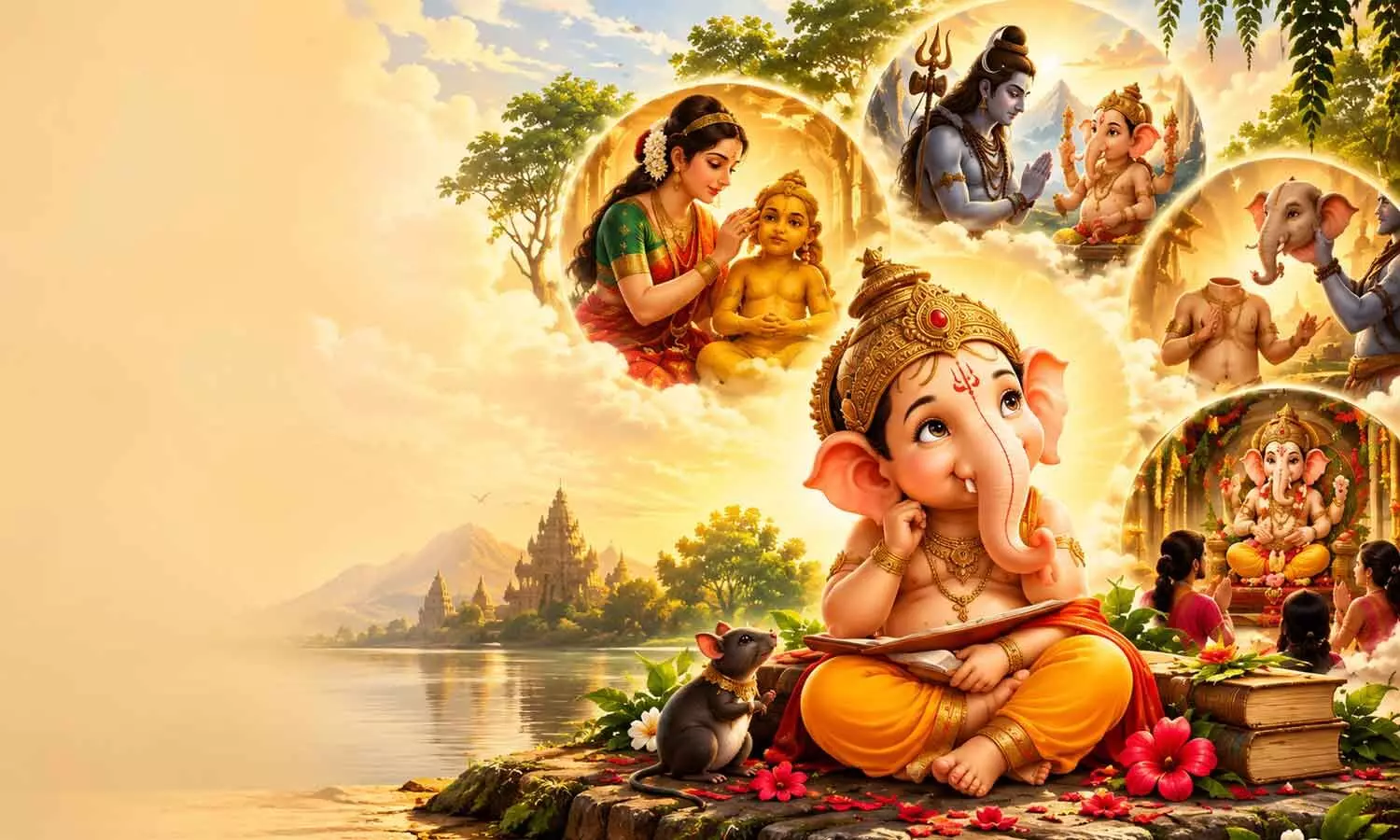
Ganesh Chaturthi 2026: The birth story of lord Ganesha and its significance
Ganesh Chaturthi is a festival dedicated to Lord Ganesha, celebrated with prayers, rituals and community festivities across India. The festival is also rooted in traditional stories about Ganesha’s birth, his relationship with Lord Shiva and his significance as the remover of obstacles.
The mythological birth of lord Ganesha
According to a popular Hindu mythological story, Goddess Parvati created Ganesha from the turmeric paste or sacred paste from her body and asked him to guard the entrance while she went to bathe. When Lord Shiva arrived and tried to enter, Ganesha stopped him because he was following his mother’s instructions.
A confrontation followed, and Lord Shiva severed Ganesha’s head. When Parvati learned what had happened, she was deeply angered and asked Shiva to bring her son back to life. To fulfil her request, Shiva placed the head of an elephant on Ganesha and restored him to life.
The story is traditionally understood as the beginning of Ganesha’s divine identity. It also highlights themes of duty, devotion, obedience and the bond between a mother and her son.
Lord Shiva’s Role in Ganesha’s Story
Lord Shiva plays a central role in the traditional story of Ganesha’s birth and transformation. The encounter between Shiva and Ganesha begins with a conflict over Ganesha’s duty to follow his mother’s instructions. After learning that Ganesha is Parvati’s son, Shiva restores him to life and accepts him as his own son.
Ganesha is subsequently regarded as an important Hindu deity and is traditionally associated with wisdom, auspiciousness and the removal of obstacles. He is popularly known as Vighnaharta, meaning the remover of obstacles, and Pratham Pujya, referring to the tradition of worshipping him first before beginning important activities.
This tradition is reflected in many Hindu ceremonies and occasions, including weddings, housewarming ceremonies and the beginning of new ventures.
What Is Ganesh Chaturthi?
Ganesh Chaturthi is a Hindu festival celebrated in honour of Lord Ganesha and is traditionally associated with his birth. It falls on the Chaturthi Tithi, or fourth lunar day, of the Shukla Paksha in the month of Bhadrapada according to the Hindu calendar. Since the Hindu lunar calendar does not correspond directly with the Gregorian calendar, the festival falls on different dates each year.
During Ganesh Chaturthi, devotees may bring clay or other traditionally made idols of Ganesha into their homes or install them in temples and community pandals. The idol is worshipped for a period determined by family or regional custom, after which devotees perform Visarjan.
The festival is marked by prayers, aarti, devotional music, festive food and community celebrations, with the duration and rituals varying across regions and families.
Why Is Ganesh Chaturthi Celebrated?
Ganesh Chaturthi is observed to honour Lord Ganesha and seek his blessings for wisdom, knowledge, auspiciousness and the removal of obstacles. For devotees, the festival is also an opportunity for prayer, reflection and community participation.
The significance of Ganesh Chaturthi can be understood through several traditional aspects:
• Honouring the birth of Lord Ganesha: The festival commemorates the traditional belief surrounding Ganesha’s divine birth.
• Seeking wisdom and knowledge: Ganesha is associated with intellect, learning and good judgement.
• Praying for success: Devotees seek Ganesha’s blessings before beginning important activities and new ventures.
• Worshipping the remover of obstacles: As Vighnaharta, Ganesha is traditionally invoked for help in overcoming difficulties.
• Bringing families together: Home pujas, aarti and festive meals provide an opportunity for families to celebrate together.
• Encouraging community participation: Public pandals and cultural programmes bring neighbourhoods and communities together.
• Supporting spiritual reflection: Prayer, aarti and devotional practices offer devotees time for reflection and worship.
• Preserving cultural traditions: The festival provides an opportunity to pass religious stories, rituals, food traditions and cultural practices from one generation to another.
Dramatic face-off near Jantar Mantar. Rahul and Priyanka sit on the road
MPs vs Police. Chaos and High Drama Unfold on Delhi Roads
Henri Kagan, Kenso Soai Win 2026 Nobel Chemistry Prize for Autocatalysis
AP cabinet approves 12 agenda items
High Courts should not suggest custodial interrogation of accused, says Supreme Court
Telangana govt issues orders on DA hike


