






Industrial safety under lens post boiler blast in Sri City
In Short
Most units in Sri City are green-category, while three are classified as orange-category including TIL Healthcare Pvt Ltd

Share :
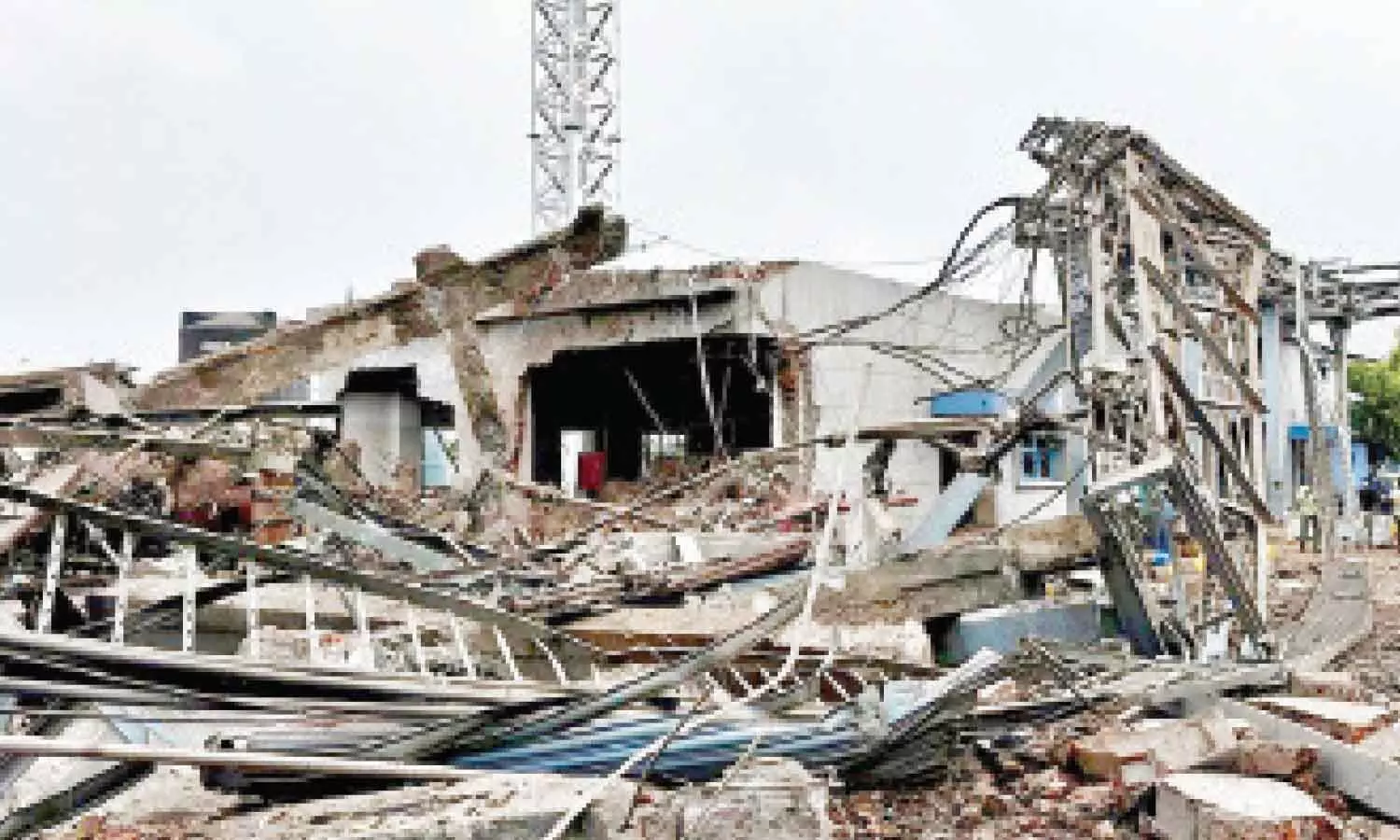
File photo of boiler blast area in Sri City
Tirupati: The boiler blast at a pharma unit in Sri City that claimed five lives has put the spotlight on industrial safety practices, particularly the maintenance and operation of boilers. Sri City does not permit red-category industries due to the risks they pose to employees and workers. Most of the units operating in the industrial zone belong to the green category, while only three are classified as orange category. TIL Healthcare Private Limited, where Saturday’s boiler blast occurred, is one of the orange-category units.
The unit uses a boiler to heat chemicals to specified temperatures. The equipment was installed outside the main facility as a safety precaution, as an accident involving the boiler inside the plant could put hundreds of workers at risk. Despite the precaution, the boiler exploded, killing five workers.
Boilers are widely used in several industries, including pharmaceutical and chemical manufacturing, dairy and food processing. Their operation requires regular inspection and proper maintenance by both the managements of industrial units and the authorities concerned.
The latest incident has prompted experts and workers to call for mandatory safety audits of industrial units, particularly those in the red and orange categories, across the district. They said regular inspections could help identify safety lapses and prevent accidents. High pressure and inadequate water levels are among the major causes of boiler explosions. Corrosion inside boiler tubes can weaken the equipment and increase the risk of accidents. Safety valves, which release excess steam and pressure, must remain functional at all times. Experts said their operation should be checked during every shift, including through manual testing of the levers.
Experts also stressed the need to deploy trained personnel to operate and monitor boilers. However, inexperienced workers are often entrusted with the responsibility, raising safety concerns. In Saturday’s incident, the water level in the boiler was reportedly not properly monitored, raising questions over the safety checks followed at the unit.
The number of casualties in industrial accidents has also increased in recent years. Available data shows that industrial accidents in the district claimed two lives each in 2021 and 2022, and two in 2023. The toll rose to nine in 2024, 13 in 2025 and 16 so far in 2026. The number of injured workers stood at 19 in 2021, 20 in 2022, 13 in 2023, 14 in 2024, 16 in 2025 and six so far in 2026.
The rising casualties have strengthened demands for stricter monitoring of industrial units, periodic safety audits and proper training for personnel operating boilers and other industrial equipment.
Dramatic face-off near Jantar Mantar. Rahul and Priyanka sit on the road
MPs vs Police. Chaos and High Drama Unfold on Delhi Roads
Henri Kagan, Kenso Soai Win 2026 Nobel Chemistry Prize for Autocatalysis
AP cabinet approves 12 agenda items
High Courts should not suggest custodial interrogation of accused, says Supreme Court
Telangana govt issues orders on DA hike


