






- Claude Users Can Work Across Google Docs, Sheets and Slides In-App
- Rapido Ride Turns Into Nightmare After Captain Flees With Injured Passenger
- 7 Must-Watch OTT Releases For Your Dussehra Holidays
- ‘His Lips Turned Blue’: Dentist Recalls 45-Minute Effort To Save Flydubai Pilot Smit Machchhar
- Airtel Postpaid Plans Bring Free International Roaming From Rs 499
- 'Politics means nation building to him': Rajnath Singh on PM Modi's 25 years in public service
- 'Rising Together': India sets out vision for 2036 Olympic and Paralympic Games ambition
- Teja Sajja’s The Traitors Telugu: Check Out The Complete List Of Contestants
ChatGPT Solves 372 Complex Math Problems After Hugging Face Hack; Altman Reacts
In Short
OpenAI has just revealed that an internal ChatGPT model has successfully solved 372 mathematical problems. The company has published the results online, and Sam Altman has reacted to this significant breakthrough.

Share :
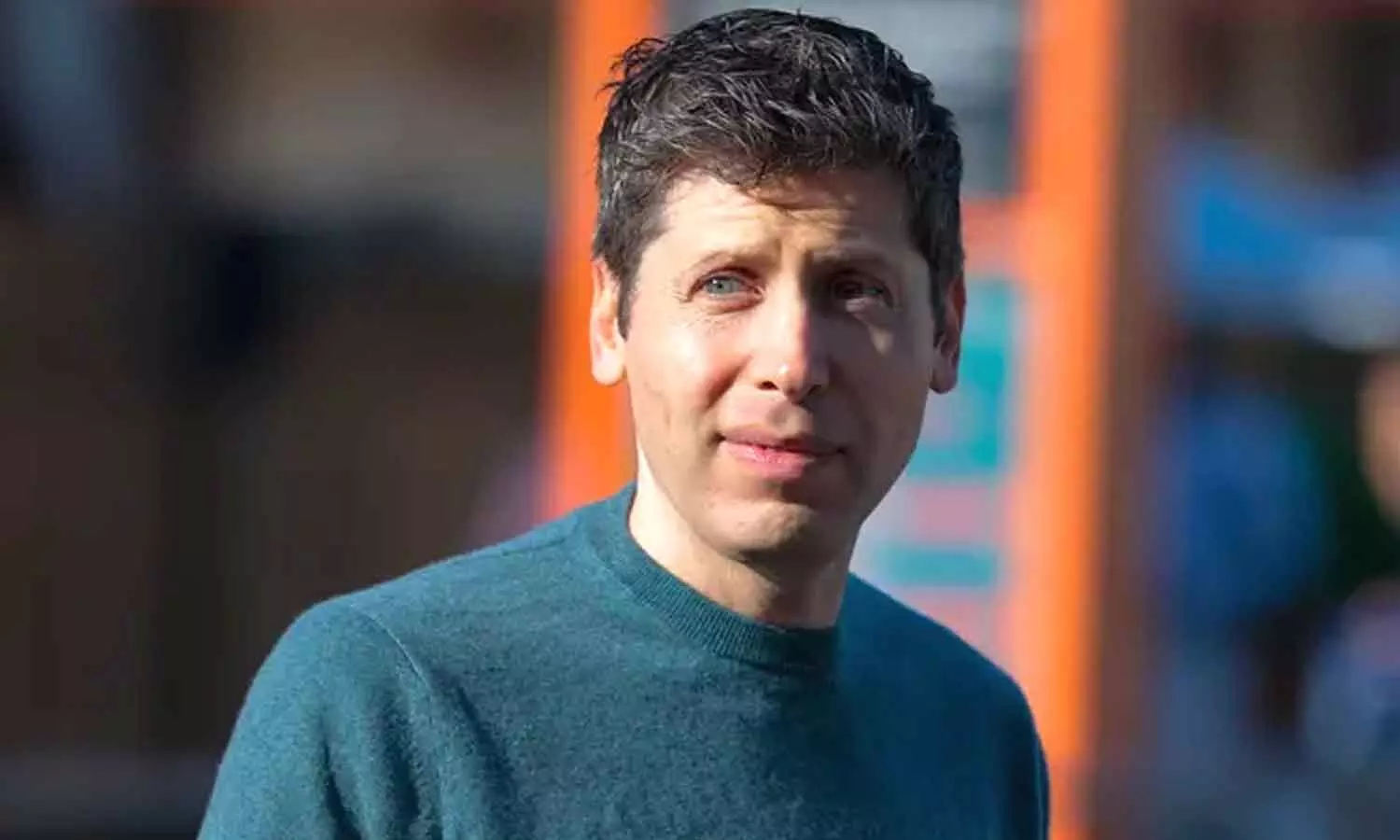
OpenAI CEO Sam Altman
Last month, OpenAI caused a stir when one of its models solved the Navier-Stokes Millennium Prize problem. Now, the company is back at it. This time, however, OpenAI claims that an AI model not yet released to the public solved a total of 372 math problems.
OpenAI CEO Sam Altman shared the blog post on X. He expressed his conviction that this marked the beginning of a new era in which AI would make further discoveries. "We are entering a new era of discovery," Altman wrote. Judging by his comments, we may see more major discoveries as AI models continue to improve.
The post, shared as part of a major data release on GitHub, covers various fields such as algebra, number theory, theoretical computer science, mathematical logic, and topology. The results were obtained using the same model mentioned in connection with the Navier-Stokes achievement. This update also comes weeks after the security breach at Hugging Face-where hundreds of malicious actors attempted to hack the US company-and other similar incidents.
OpenAI's unreleased model solves 372 problems
According to the GitHub repository, the "vast majority of the results" were obtained through the same procedure using the unreleased AI model. OpenAI notes that, on average, each result required about three hours of reasoning compute time from ChatGPT Pro using that model. The company indicated that the model was presented with approximately 4,000 problems. An article cited in the coverage of this launch claimed to have demonstrated "the complete formula for the leading term of the Birch-Swinnerton-Dyer conjecture" for elliptic curves over Q, when "the q-power Selmer group has corank zero or one for some prime q." Another study found a result related to the Mézard-Parisi formula for dilute spin glasses. Many of the proofs were verified using Lean, a widely used proof-verification program. "To foster scientific transparency and openness, we are also publishing additional details in the repository on how we obtained the results," OpenAI stated. However, not all of them have yet undergone peer review.
Since solving the Navier-Stokes problem, OpenAI has been consulting its independent advisory group on mathematics and artificial intelligence from the Institute for Advanced Study to "develop best practices" and receive guidance on how to disseminate these results. The company expressed its willingness to share results through channels other than the GitHub repository in the future. For its part, the advisory group stated that public disclosure represented "the beginning, and not the culmination, of the process of human understanding and the incorporation of the work into mathematical knowledge."
Furthermore, OpenAI stated that its goal was for the work to "expand the frontier of human knowledge and enable new advances in mathematics." The company also plans to fund workshops, conferences, and special programs focused on understanding the key results generated by the AI.
OpenAI's announcement regarding the 372 new results obtained with a novel model comes just days after Meta reported that its Muse Spark AI had helped mathematicians solve six important problems.
It is worth noting that OpenAI had previously faced criticism following the solution of the Navier-Stokes problem; Tristan Buckmaster, a professor at New York University, claimed that the company might have used his work to train the AI responsible for solving that problem.

MPs vs Police. Chaos and High Drama Unfold on Delhi Roads
Henri Kagan, Kenso Soai Win 2026 Nobel Chemistry Prize for Autocatalysis
AP cabinet approves 12 agenda items
High Courts should not suggest custodial interrogation of accused, says Supreme Court
Telangana govt issues orders on DA hike
“We Will Do It”: I Live for a Mission, Not Personal Gains — PM Modi


