






Justice behind closed doors: A crisis of confidence

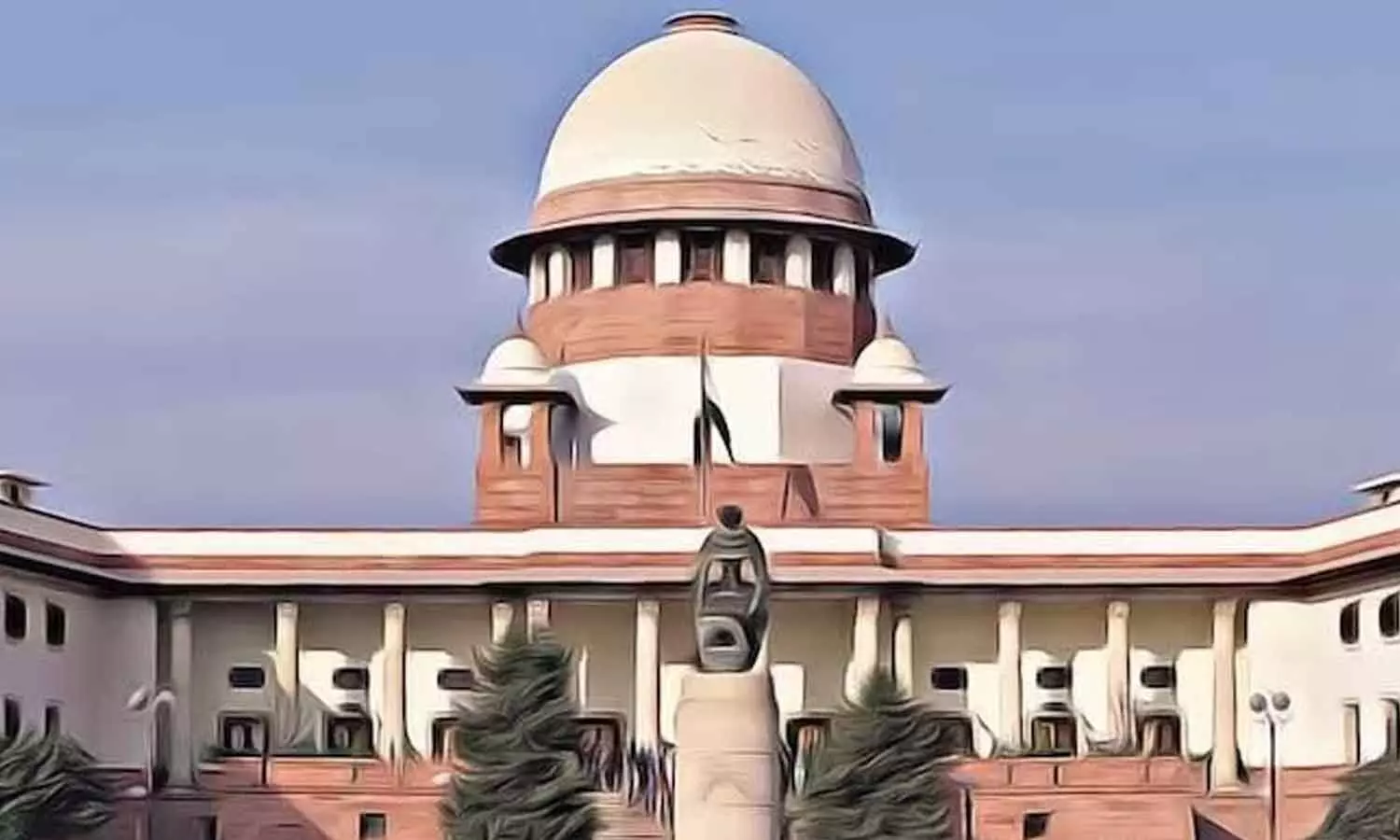
Supreme Court of India
A binding, transparent and reviewable recusal framework; merit-based and publicly disclosed criteria for government counsel appointments; a Bar Council disciplinary machinery that functions with urgency; and Collegium resolutions that state their reasons, as Justice Bhuyan urged. None of these diminishes judicial independence. They shore it up. Courts that are seen to be fair command the trust that makes their orders obeyed. Transparency is the evidence by which fairness is judged
When a sitting judge of the Supreme Court publicly asks whether his own institution has taken “a step back” from the principle of transparency, the question deserves more than polite applause. Speaking at the launch of the Judicial Transparency Index: Assessing Disclosure of Information by the Supreme Court and the High Courts, a report prepared by the Vidhi Centre for Legal Policy, Justice Ujjal Bhuyan on Sunday noted that the deliberations of the Supreme Court Collegium on the elevation and transfer of judges remain confidential. The reasons for rejecting or deferring a recommendation are rarely disclosed in full, and that the criteria applied are not codified in any publicly accessible instrument. “Citizens have a right to know what is happening in the courts. They have a right to know who their judges would be,” he observed.
The report that he launched gives that concern empirical weight. Its first systematic study of disclosure practices across the higher judiciary found that only five High Courts published their budgets on their websites for 2025-26, that none has published the criteria governing case allocation, and that, of 813 judges, only 87 have publicly disclosed their assets. Justice Bhuyan also questioned the continued use of the sealed cover procedure, noting that national security is often the justification cited. He welcomed the report while acknowledging that the judiciary had made “significant strides”, strides that have not yet cohered into a holistic approach.
These are not abstract anxieties. They touch the heart of how a democracy chooses, and holds accountable, those who sit in judgment over it. A judiciary that enjoys public trust is better placed to enforce government accountability and uphold the rule of law. Transparency is the bridge between the two.
The deficit beyond the bench:
The transparency deficit is nowhere more consequential than in appointments. And it extends beyond judges to the lawyers who appear before them. On July 28, Justice Harinath N of the Andhra Pradesh High Court, allowing a review petition and recalling an earlier consent order, recorded that the conduct of counsel raised “a serious question of professional misconduct and a deliberate attempt to commit fraud on this Court,” and that counsel appearing for the State and its instrumentalities had failed in discharging their fiduciary duty. The court expressly stated that it was not expressing any opinion on the involvement of the counsel concerned and directed the Director General of Anti-Corruption Bureau (ACB) to have the matter inquired into by an officer not below the rank of Inspector General. The restraint of that phrasing itself is instructive: even while flagging systemic concerns, the Court scrupulously left adjudication of guilt to the inquiry.
Questions have also been raised about how government counsel is selected. The Allahabad High Court, in Jubeda Begum v. UPSRTC, spoke of an “entitlement culture” in state counsel appointments, recalling the Supreme Court’s ruling in Kumari Shrilekha Vidyarthi v. State of U P that appointment procedures must be transparent and merit based. Public interest litigations before the Delhi High Court have challenged preferential allotment of chambers to relatives of advocates, and courts have asked the Centre to explain the empanelment of more than 650 advocates as Central Government counsel in the Supreme Court. In August 2024, media reports said the Rajasthan Additional Advocate General resigned after allegations of nepotism in his appointment. Taken alone, none of the episodes proves systemic failure, while taken together, they show why disclosure matters.
The recusal question belongs to the same family. In a matter before the Delhi High Court this year, contentions were raised about the empanelment of a judge’s children as government counsel. The applications for recusal were dismissed. The episode sharpened an asymmetry worth noting: the Bar Council of India Rules prohibit advocates from practicing before courts where a close relative is a judge, but the Restatement of Values of Judicial Life, which urges judges to consider transfer in such situations, remains a voluntary code without enforcement machinery. The judge was bound by no rule. The advocate would have been.
The other side of the ledger:
None of this is an argument against judicial independence — the very value transparency is said to threaten. The Supreme Court’s 2015 judgment striking down the National Judicial Appointments Commission affirmed that primacy in appointments must rest with the judiciary, precisely to insulate it from executive pressure. Critics of disclosure worry, with reason, about the privacy of judges, about exposure to orchestrated scrutiny, and about the politicisation of legitimate differences. These are serious concerns. A judge who must defend every choice in public may choose the safest option rather than the right one.
The answer, however, is not opacity but calibrated openness: published criteria for appointment and empanelment; reasoned decisions that protect confidentiality where it is genuinely required; and disclosure where the public interest clearly outweighs private expectation. Transparency presumes neither guilt nor perfection. It presumes that citizens are entitled to know how power over them is distributed. The system itself offers models of quiet integrity, like Justice Sujoy Paul, who, in early 2024, reportedly sought transfer from the Madhya Pradesh High Court to the Telangana High Court because his son was practicing law in the Madhya Pradesh High Court. Such conduct is commendable. Codifying its standard would make it ordinary rather than exceptional.
The road ahead:
The reforms that emerge from the serious concerns aired by Justice Ujjal Bhuyan are concrete. A binding, transparent and reviewable recusal framework; merit-based and publicly disclosed criteria for government counsel appointments; a Bar Council disciplinary machinery that functions with urgency; and Collegium resolutions that state their reasons, as Justice Bhuyan urged. None of these diminishes judicial independence. They shore it up. Courts that are seen to be fair command the trust that makes their orders obeyed. Transparency is the evidence by which fairness is judged.
Justice Bhuyan’s remarks are best read as an invitation to strengthen the institution from within — not as an indictment of it. The overwhelming majority of judges discharge their duties with independence, and most advocates serve with dedication. But in a constitutional democracy, good conduct and public confidence are not the same thing. The first must be demonstrated. The second must be earned.
Opening the windows of the judiciary is not a concession to its critics. It is the surest way to prove that the pillars within are sound.
(The writer is with the Cholleti BlackRobe Chambers, Hyderabad, and writes on economy, politics and law)
NEET Paper Leak Fallout: Dharmendra Pradhan Steps Down as Education Minister, Says ‘I Never Shied Away From Responsibility’
AI Appreciation Day 2026: Trust and infrastructure emerge as the next frontier for AI, say experts
Few Takers for HILT Policy in Hyderabad Amid Low Response
Cockroach Janta Party Protest LIVE Updates: Demonstrators Assemble at Jantar Mantar
Fire breaks out at a building in Ameerpet of Hyderabad, fire brigade arrives
ED’s Vedanta raids raise questions about proportionality, perception


