






Gujarat: 15,000 solar pumps installed in Narmada, highest under PM-KUSUM

Gujarat: 15,000 solar pumps installed in Narmada, highest under PM-KUSUM
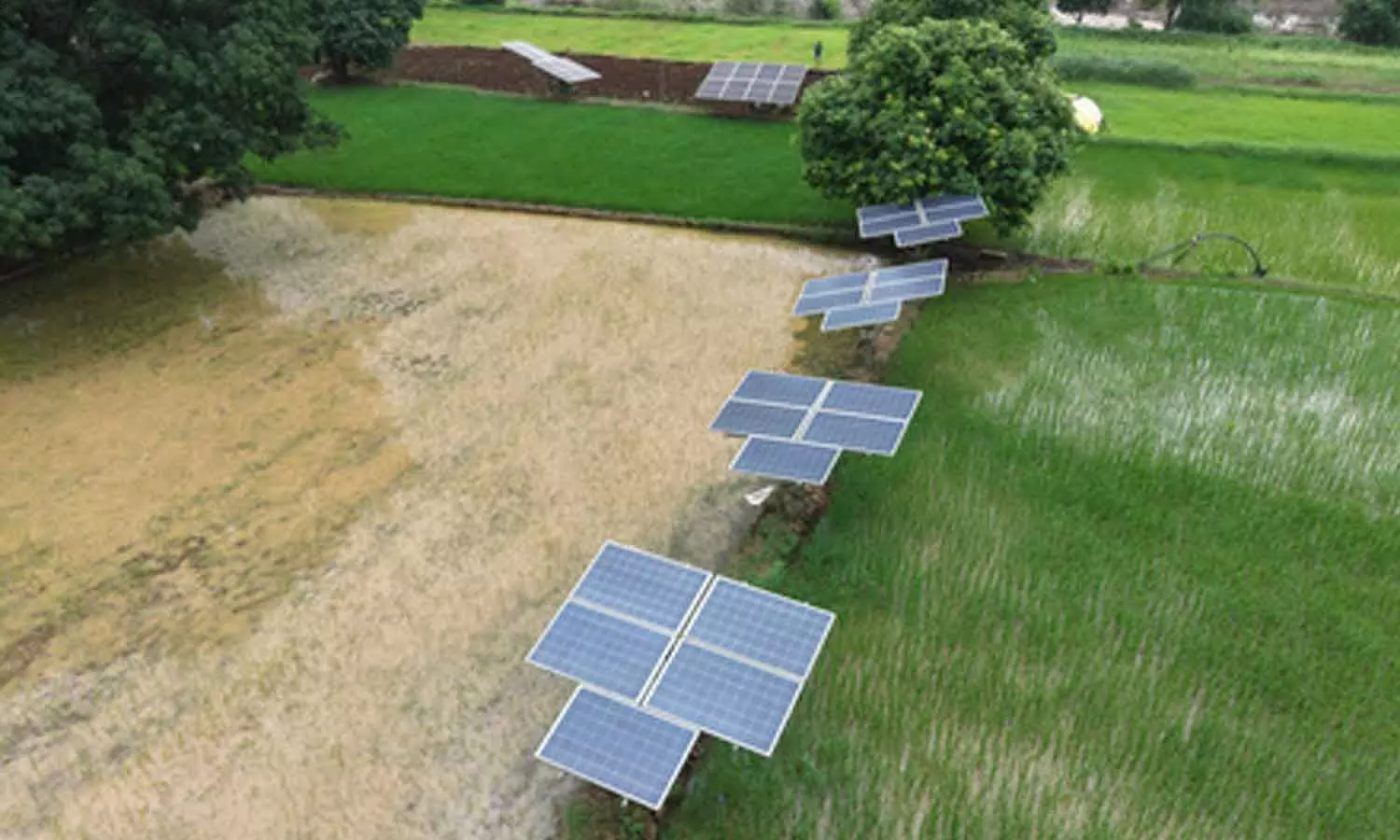
Narmada district emerges as Gujarat's top performer under the PM-KUSUM scheme, installing 14,989 solar pumps to empower tribal farmers with year-round irrigation.
Narmada district has emerged as Gujarat's leading district in the implementation of the Pradhan Mantri Kisan Urja Suraksha evam Utthan Mahabhiyan (PM-KUSUM), with 14,989 off-grid solar agricultural pumps installed at an expenditure of Rs 618.41 crore, allowing thousands of tribal farmers in the hilly and forested region to shift from rain-dependent cultivation to year-round irrigation.
According to official information released on Monday, Gujarat has sanctioned 22,792 solar agricultural pumps under the scheme over the past five years, with benefits reaching 22,787 farmers.
Of these, Narmada alone accounts for 14,989 off-grid solar pumps, the highest in the state.
Launched in 2019, the PM-KUSUM scheme aims to provide farmers with clean energy for irrigation while reducing dependence on conventional electricity and diesel. Nationally, the scheme targets the installation of 14 lakh off-grid solar agricultural pumps.
So far, 1,307,190 pumps have been sanctioned and 1,149,988 installed, representing around 88 per cent of the target achieved.
The scheme has had a significant impact in Narmada, where around 1.06 lakh hectares of the district's total geographical area of 2.81 lakh hectares comprise forests and hills.
Farmers in remote areas such as Dediapada and Sagbara had traditionally relied on monsoon rainfall because of limited electricity infrastructure, restrictions in eco-sensitive zones and the high cost of diesel-powered irrigation.
Officials said off-grid standalone solar pumps under PM-KUSUM Component-B have helped farmers to irrigate their fields during daylight hours without depending on electricity supply or diesel fuel.
The absence of new power lines, electricity poles and substations has also helped minimise disturbance to the environmentally sensitive areas surrounding the Shoolpaneshwar Wildlife Sanctuary while reducing diesel consumption and associated pollution.
Under a special arrangement for tribal and forest areas in Gujarat, beneficiaries receive 100 per cent financial assistance through a combination of 60 per cent funding from the Central government and 40 per cent from the state government, allowing even small and marginal farmers to install the systems without financial burden.
Rakesh Vasava, a farmer from Samot village in Dediapada, said the scheme had transformed his farming practices.
"Earlier, we could cultivate only one crop during the monsoon. After receiving the benefit of the PM-KUSUM scheme, we now farm in all three seasons of the year. Our income has increased through crops such as maize, paddy, pulses and vegetables," he said.
He added that his selection as a beneficiary under the scheme led to an invitation to the Republic Day celebrations in New Delhi on January 26 this year, where he had the opportunity to interact with President Droupadi Murmu.
B.B. Patel, Executive Engineer at DGVCL, Rajpipla, said farmers in Dediapada, Sagbara and Chikda were now cultivating crops in the Kharif, Rabi and summer seasons.
"As a result, agricultural income has increased, migration in search of employment has declined, animal husbandry has received a boost, and farmers have gained an additional source of income," he said.
NEET Paper Leak Fallout: Dharmendra Pradhan Steps Down as Education Minister, Says ‘I Never Shied Away From Responsibility’
AI Appreciation Day 2026: Trust and infrastructure emerge as the next frontier for AI, say experts
Few Takers for HILT Policy in Hyderabad Amid Low Response
Cockroach Janta Party Protest LIVE Updates: Demonstrators Assemble at Jantar Mantar
Fire breaks out at a building in Ameerpet of Hyderabad, fire brigade arrives
ED’s Vedanta raids raise questions about proportionality, perception


