






"The Future Belongs to Finance Professionals Who Never Stop Learning": Finance Professor

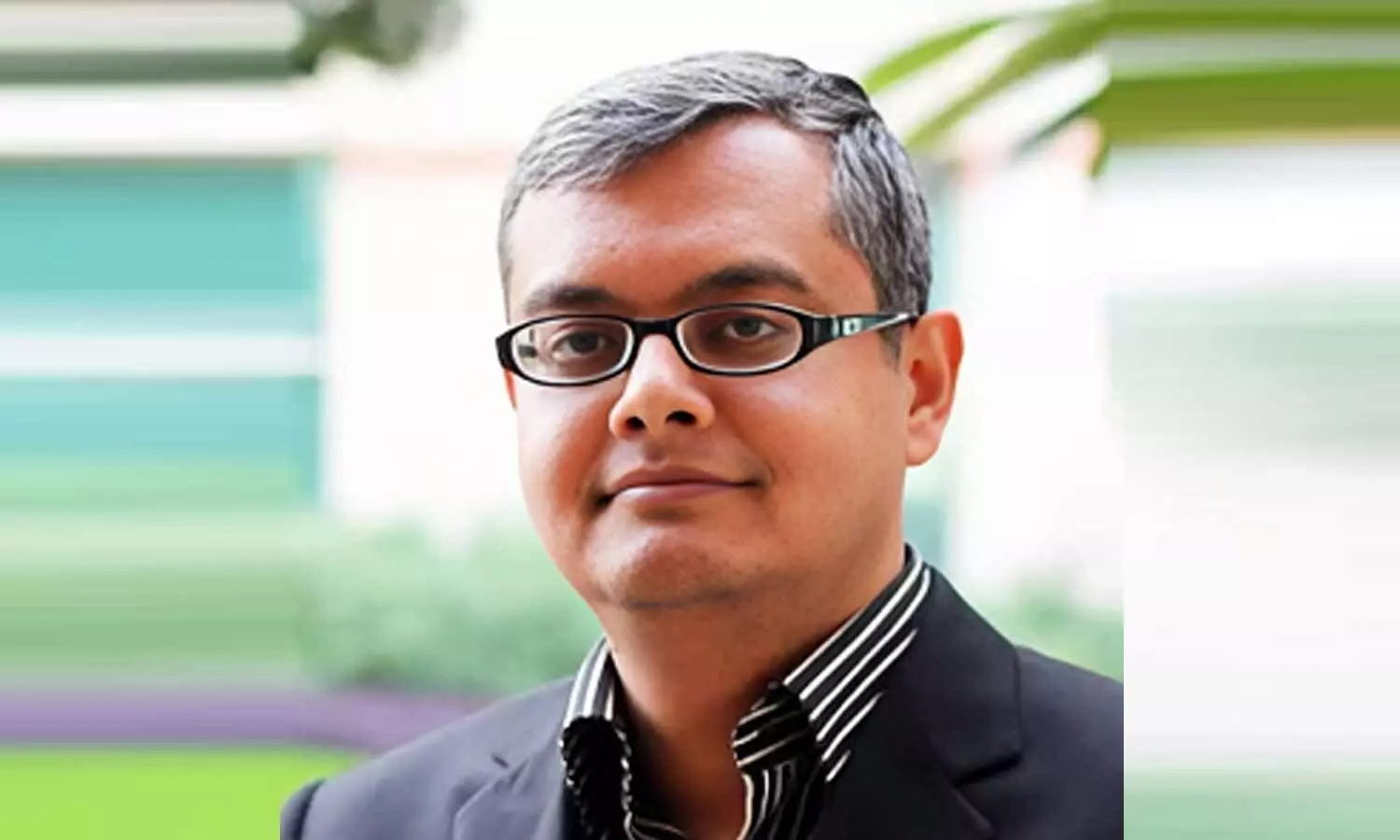
Dr Arindam Banerjee
Interview with Dr Arindam Banerjee, Professor (Finance) and Program Director – Master of Applied Finance & Wealth Management, SP Jain School of Global Management
As global wealth continues to expand and financial markets become increasingly interconnected, the demand for professionals with specialised expertise in wealth management, private banking, fintech, and investment advisory is growing rapidly. At the same time, technology, artificial intelligence, ESG investing, and digital transformation are reshaping the financial services landscape, creating new opportunities for students pursuing careers in finance.
In this interview, Dr Arindam Banerjee, Professor (Finance) and Program Director – Master of Applied Finance & Wealth Management at SP Jain School of Global Management, discusses the evolving global finance landscape, emerging hiring trends, the growing relevance of specialised finance education, and the skills students need to build successful careers in wealth management and financial services.
Q1. Global wealth creation is accelerating rapidly. How is this changing the demand for professionals across wealth management, private banking, and asset management globally?
The world has witnessed unprecedented wealth creation over the past decade, with the number of high-net-worth individuals (HNIs) and ultra-HNIs growing across both developed and emerging economies. This expansion has significantly increased demand for professionals in wealth management, private banking, and asset management.
There is also growing demand for expertise in alternative investments, sustainable finance, digital advisory platforms, and family office management. As intergenerational wealth transfer accelerates, organisations are recruiting not only relationship managers but also analysts, compliance specialists, investment professionals, and technology experts. The result is a highly connected global talent market where professionals with cross-border understanding, digital capabilities, and international exposure are increasingly valued.
Q2. India is witnessing a rise in HNIs and emerging affluent households. How relevant is wealth management as a long-term career opportunity for Indian students?
India has become one of the world's fastest-growing wealth markets, driven by rising entrepreneurship, increasing household wealth, and greater participation in financial markets.
The expansion of mutual funds, portfolio management services, alternative investment funds, and digital investment platforms has created sustained demand for wealth management professionals. Unlike some areas of finance that fluctuate with market cycles, wealth management benefits from long-term structural trends such as the financialisation of savings, growing equity participation, and intergenerational wealth transfer.
For students, it offers a rewarding career that combines financial expertise, client advisory, and long-term relationship management while providing strong career growth and international opportunities.
Q3. Why are students and employers increasingly moving towards specialised finance programmes instead of traditional finance degrees?
Traditional finance degrees provide broad theoretical knowledge, but employers increasingly seek graduates with industry-ready skills.
Specialised programmes in wealth management, fintech, ESG investing, quantitative finance, and risk management expose students to real datasets, industry tools, regulatory frameworks, and practical case studies. Students also benefit from internships, mentorship, and stronger industry engagement, helping them transition more smoothly into the workplace.
This shift reflects growing demand for graduates who can contribute immediately rather than requiring extensive on-the-job training.
Q4. How are finance careers evolving with fintech, AI, ESG investing, and data-driven decision-making?
Technology is transforming every part of financial services.
Routine functions such as reporting, reconciliation, and basic credit evaluation are increasingly automated. Meanwhile, demand is rising for professionals who can interpret data, work alongside AI systems, understand digital platforms, and make informed strategic decisions.
ESG investing has also created new opportunities in sustainability research, impact investing, and green finance. Today's finance professionals are expected to combine analytical skills with technological understanding and ethical judgement.
Q5. What skills are financial services firms looking for in young professionals today?
Technical expertise remains important, but employers increasingly value well-rounded professionals.
Core technical skills include financial modelling, valuation, data analysis, and familiarity with Excel, Python, Power BI, and Bloomberg. Equally important are communication, commercial awareness, ethical judgement, problem-solving, and teamwork.
As automation handles routine tasks, human capabilities such as critical thinking, empathy, relationship-building, and clear communication are becoming stronger differentiators.
Q6. How does studying in a mature financial ecosystem like the UK benefit finance students?
Studying in the UK exposes students to one of the world's most sophisticated financial centres.
London offers experience across capital markets, fintech, insurance, asset management, and sustainable finance. Students gain exposure to international regulations, multi-currency markets, and global investment practices while learning from faculty and industry professionals.
This international environment also strengthens cross-cultural communication and prepares students for careers spanning multiple global markets.
Q7. What hiring trends are emerging across wealth management, fintech, private banking, family offices, and investment advisory firms?
Hiring continues to expand across these sectors, with increasing emphasis on specialised expertise.
Private banks and wealth management firms are strengthening advisory and relationship management teams. Family offices are recruiting professionals across investments, governance, philanthropy, and succession planning. Fintech companies continue hiring for analytics, digital products, customer experience, and risk management.
Across sectors, employers increasingly prefer candidates with relevant internships, professional certifications, practical exposure, and strong technology skills.
Q8. How important is international exposure for students pursuing global finance careers?
International exposure has become an important advantage because financial markets are deeply interconnected.
Professionals working across global markets need to understand different regulatory environments, tax systems, currencies, and investment practices. Exposure to international education, internships, or multicultural work environments helps students develop adaptability, global awareness, and stronger client engagement skills.
These capabilities are particularly valuable in wealth management, asset management, investment banking, and multinational financial institutions.
Q9. How can finance education better bridge the gap between classroom learning and industry expectations?
Finance education must become increasingly experiential.
Institutions should integrate live case studies, trading simulations, analytics platforms, capstone projects, internships, and industry mentorship into the curriculum. Faculty with both academic and industry experience can provide valuable practical insights.
Curricula should also evolve regularly to reflect changes in technology, regulation, and financial markets, ensuring graduates remain industry-ready.
Q10. What advice would you give students preparing for careers in finance and wealth management?
Students should gain practical experience early through internships and industry projects while continuously strengthening both technical and interpersonal skills.
Building expertise through specialised postgraduate programmes and globally recognised certifications can improve long-term career prospects. At the same time, students should remain curious about global markets, embrace technological change, develop strong communication skills, and commit to lifelong learning.
Successful careers in finance are built through continuous development, professional networks, ethical practice, and consistent performance rather than shortcuts.
NEET Paper Leak Fallout: Dharmendra Pradhan Steps Down as Education Minister, Says ‘I Never Shied Away From Responsibility’
AI Appreciation Day 2026: Trust and infrastructure emerge as the next frontier for AI, say experts
Few Takers for HILT Policy in Hyderabad Amid Low Response
Cockroach Janta Party Protest LIVE Updates: Demonstrators Assemble at Jantar Mantar
Fire breaks out at a building in Ameerpet of Hyderabad, fire brigade arrives
ED’s Vedanta raids raise questions about proportionality, perception


